World Food Books' programme is largely produced on Kulin Nation land. We acknowledge the Wurundjeri people of the Kulin Nation as the first and continuing custodians of this land, and pay respect to their Elders past, present, and emerging.
World Food Books is an arts and special interests bookshop in Naarm / Melbourne. Founded in 2010, World Food Books is devoted to the presentation of a rotating, hand-selection of international art, design, literary and counterculture publications with an emphasis on the anti-traditional, the experimental, the avant-garde, the heretic, the marginal.
Presenting new titles alongside rare and out-of-print books, catalogues and journals spanning the fields of modern and contemporary art, design, photography, illustration, film, literature, poetry, cultural theory, philosophy, sexuality, popular and underground culture in its many radical forms, World Food Books wishes to encourage adventurous, thoughtful and open-minded reading, looking, writing, and exchange of publishing and ideas, both current and historical.
As well as our bookshop, located in Melbourne's historical Nicholas Building, all of our inventory is available internationally via our online mail-order service.
World Food Books semi-regularly co-ordinates "Occasions", a programme of exhibits and events at the bookshop and in partnership with other hosts (such as museums and art galleries) that develop out of the activities, relationships and content of the bookshop itself.
World Food Books
The Nicholas Building
37 Swanston Street
Room 5, Level 6
Melbourne 3000
Australia
SHOP HOURS:
Thu–Fri 12–6, Sat 12–5
WEB-SHOP OPEN 24/7
World Food Books
Postal Address:
PO Box 435
Flinders Lane
Victoria 8009
Australia
Art
Theory / Essay
Architecture / Interior
Graphic Design / Typography
Photography
Fashion
Eros
LGBTQ+
Fiction / Poetry
Weird / Speculative / Science Fiction / Horror
Transgressive / Visceral / Abject
Symbolism / Decadence / Fin de siècle
Film / Video
Painting
Sculpture / Installation
Performance / Dance / Theater
Drawing
Sound / Music
Curatorial
Group Shows / Collections
Periodicals
Out-of-print / Rare
Posters / Ephemera / Discs
Signed Books
World Food Books Gift Voucher
World Food Book Bag
Australian Art
Australian Fiction
Australian Science Fiction / Speculative Fiction
Australian Poetry
Australian Photography
Japanese Photography
Conceptual Art
Minimal Art
Dada
'Pataphysics / Oulipo
Fluxus
Concrete Poetry
Pop Art
Surrealism
Arte Povera
Arte Informale / Haute Pâte / Tachism
Nouveau Réalisme / Zero / Kinetic
Situationism / Lettrism
Collage / Mail Art / Xerox Art
Art Brut / Folk / Visionary / Fantastic
Illustration / Graphic Art / Bandes Dessinées
Furniture
Italian Radical Design / Postmodernism
Textiles
Ceramics / Glass
Counterculture
Protest / Revolt
Philosophy
Psychoanalysis
Anthropology
Anarchism
Socialism / Anarchism / Communism / Capitalism
Literary Theory / Semiotics / Language
Feminism / Women's Studies
Gender Studies / Sexuality
Anthropology
Fetishism / BDSM
Drugs / Psychedelia
Crime / Violence
Animal Rights / Veganism
Occult / Esoterica
Ecology / Earth / Alternative Living
Whole Earth / Crafts
All prices in AUD (Australian dollars)
Pick-Ups
Pick-up orders can be collected in our bookshop during opening hours after order date. Please collect any Pick-up orders within 2 weeks of ordering as we have limited storage space. Orders will be released back into stock if not collected within this time. No refunds can be made for pick-ups left un-collected. If you cannot make it in to the bookshop in this time-frame, please choose postage option.
Return Policy
All sales are final. We do accept returns (for refund or exchange) for items received in error. All our orders are packed with special care using heavy-duty padding and cardboard book-mailers or bubble mailers (for smaller books), using reinforcement where required. We cannot take responsibility for any lost, stolen or damaged parcels.
Insurance
Should you wish to insure your package, please email us directly after placing your order and we can organise this at a small extra expense. Although all standard/express tracked packages are very safe and dependable, we cannot take responsibility for any lost, stolen or damaged parcels. We recommend insurance on valuable orders.
Interested in selling your old books, catalogues, journals, magazines, comics, fanzines, ephemera? We are always looking for interesting, unusual and out-of-print books to buy. We only buy books in our fields of interest and specialty, and that we feel we can resell.
We base these prices on desirability, market value, in-print prices, condition and our current stock levels. We offer cash, store credit, and can take stock on consignment. All
about 25% of the price we expect to get when we sell them, or 30% in store credit. We base these prices on desirability, market value, in-print prices, condition and our current stock levels.
Sell your books any day of the week. You can drop them off and return later. If you have a lot of books, we can visit your Sydney home.
We buy books that we feel we can resell. We offer about 25 % of the price we expect to get when we sell them, or 30% in store credit. We base these prices on desirability, market value, in-print prices, condition and our current stock levels.
Philadelphia Wireman
03 August - 01 September, 2018
World Food Books is proud to announce our next Occasion, the first presentation of sculptures by Philadelphia Wireman in Australia.
The Philadelphia Wireman sculptures were found abandoned in an alley off Philadelphia’s South Street on trash night in 1982. Their discovery in a rapidly-changing neighbourhood undergoing extensive renovation, compounded with the failure of all attempts to locate the artist, suggests that the works may have been discarded after the maker’s death. Dubbed the "Philadelphia Wireman" during the first exhibition of this work, in 1985, the maker’s name, age, ethnicity, and even gender remain uncertain. The entire collection totals approximately 1200 pieces, all intricately bound together with tightly-wound heavy-gauge wire (along with a few small, abstract marker drawings, reminiscent both of Mark Tobey and J.B. Murry). The dense construction of the work, despite a modest range of scale and materials, is singularly obsessive and disciplined in design: a wire armature or exoskeleton firmly binds a bricolage of found objects including plastic, glass, food packaging, umbrella parts, tape, rubber, batteries, pens, leather, reflectors, nuts and bolts, nails, foil, coins, toys, watches, eyeglasses, tools, and jewellery.
Heavy with associations—anthropomorphic, zoomorphic, and socio-cultural responses to wrapped detritus—the totemic sculptures by Philadelphia Wireman have been discussed in the context of work created to fulfil the shamanistic needs of alternative religions in American culture. Curators, collectors, and critics have variously compared certain pieces to sculpture from Classical antiquity, Native American medicine bundles, African-American memory jugs, and African fetish objects. Reflecting the artist’s prolific and incredibly focused scavenging impulse, and despite—or perhaps enhanced by—their anonymity, these enigmatic objects function as urban artefacts and arbiters of power, though their origin and purpose is unknown. Philadelphia Wireman, whatever their identity, possessed an astonishing ability to isolate and communicate the concepts of power and energy through the selection and transformation of ordinary materials. Over the course of the past two decades, this collection has come to be regarded as an important discovery in the field of self-taught art and vernacular art.
Presented in collaboration with Fleisher-Ollman Gallery, Philadelphia, and Robert Heald, Wellington.
Susan Te Kahurangi King
02 February - 10 March, 2018
Susan Te Kahurangi King (24 February 1951 - ) has been a confident and prolific artist since she was a young child, drawing with readily available materials - pencils, ballpoint pens and felt-tip markers, on whatever paper is at hand. Between the ages of four and six Susan slowly ceased verbal communication. Her grandparents William and Myrtle Murphy had developed a special bond with Susan so they took on caring responsibilities for extended periods. Myrtle began informally archiving her work, carefully collecting and storing the drawings and compiling scrapbooks. No drawing was insignificant; every scrap of paper was kept. The King family are now the custodians of a vast collection containing over 7000 individual works, from tiny scraps of paper through to 5 meter long rolls.
The scrapbooks and diaries reveal Myrtle to be a woman of great patience and compassion, seeking to understand a child who was not always behaving as expected. She encouraged Susan to be observant, to explore her environment and absorb all the sights and sounds. Myrtle would show Susan’s drawings to friends and people in her community that she had dealings with, such as shopkeepers and postal workers, but this was not simply a case of a grandmother’s bias. She recognised that Susan had developed a sophisticated and unique visual language and sincerely believed that her art deserved serious attention.
This was an unorthodox attitude for the time. To provide some context, Jean Dubuffet coined the term Art Brut in 1945 to describe work created by self-taught artists – specifically residents of psychiatric institutions and those he considered to be visionaries or eccentrics. In 1972 Roger Cardinal extended this concept by adopting the term Outsider Art to describe work made by non-academically trained artists operating outside of mainstream art networks through choice or circumstance. Susan was born in Te Aroha, New Zealand in 1951, far from the artistic hubs of Paris and London that Dubuffet and Cardinal operated in. That Myrtle fêted Susan as a self-taught artist who deserved to be taken seriously shows how progressive her attitudes were.
Susan’s parents Doug and Dawn were also progressive. Over the years they had consulted numerous health practitioners about Susan’s condition, as the medical establishment could not provide an explanation as to why she had lapsed into silence. Dawn educated herself in the field of homeopathy and went on to treat all twelve of her children using these principles – basing prescriptions on her observations of their physical, mental and emotional state.
Doug was a linguist with an interest in philosophy who devoted what little spare time he had to studying Maori language and culture. To some extent their willingness to explore the fringes of the mainstream made them outsiders too but it was their commitment to living with integrity and their respect for individuality that ensured Susan’s creativity was always encouraged.
Even though Susan’s family supported her artistic pursuits, some staff in schools and hospitals saw it as an impediment to her assimilation into the community and discouraged it in a variety of ways. Her family was not always aware of this and therefore did not fully understand why Susan stopped drawing in the early 1990s. However, rather than dwell on the challenges that Susan faced in pursuit of her artistic practice, they prefer to highlight her achievements. In 2008 Susan began drawing again in earnest, after an almost 20 year interruption, and her work is now shown in galleries around the world.
Susan grew up without television and has been heavily influenced by the comics she read as a child. She is absolutely fearless in the appropriation of recognizable characters, such as Donald Duck and Mickey Mouse, in her work. She twists their limbs, contorts their faces, compresses them together, blends them into complex patterned backgrounds - always imbuing them with an incredible energy. Although Susan often used pop culture characters in her work they are not naive or childlike. These are drawings by a brilliant self-taught artist who has been creating exceptional work for decades without an audience in mind.
Mladen Stilinović
"Various Works 1986 - 1999"
02 February 16 - September 10, 2016
Various works 1986 - 1999, from two houses, from the collections of John Nixon, Sue Cramer, Kerrie Poliness, Peter Haffenden and Phoebe Haffenden.
Including: Geometry of Cakes (various shelves), 1993; Poor People’s Law (black and white plate), 1993; White Absence (glasses, ruler, set square, silver spoon, silver ladel with skin photograph and wooden cubes), 1990-1996; Exploitation of the Dead (grey and red star painting, wooden painting, black spoon with red table, red plate), 1984-1990; Money and Zeros (zero tie, paintings made for friends in Australia (Sue, John, Kerrie), numbers painting), 1991-1992; Words - Slogans (various t-shirts) - “they talk about the death of art...help! someone is trying to kill me”, “my sweet little lamb”, “work is a disease - Karl Marx”; Various artist books, catalogues, monographs, videos; Poster from exhibition Insulting Anarchy; "Circular" Croatian - Australian edition; Artist book by Vlado Martek (Dostoyevsky); more.
Thanks to Mladen Stilinović and Branka Stipančić.
Jonathan Walker
Always Will Need To Wear Winter Shirt Blue + Ochre Small Check Pattern
21 August - 21 September, 2015
Untitled
I am not a great reader of poetry but I always return to the work of Melbourne poet, Vincent Buckley (1925- 1988). Perhaps I find his most tantalising piece to be not a finished poem but a fragment left on a scrap of paper discovered on his desk after the poet’s death.
The poetry gathers like oil
In the word-core, and spreads
It has its music meet,
Its music is in movement.
This fragment is more the shell left behind from a volatile thought than a finished poem. I find the last two lines honest but awkward whereas the first two lines work like an arrow. Most likely he could not find a resolution so it was left. Still, in its present form, it remains an eloquent testimony to the ultimate failure of a medium to express mobile thought and sensation, in Buckley’s case, through verbal language. It’s an important matter because this is something all artists have to deal with regardless of the medium.
I have never written a poem, however, I am forever copying fragments from books on paper scraps in a vain effort to fix certain notions in my head. At first, they function as bookmarks that are sometimes returned to when I open the book. But before long, as they accumulate, they fall out littering the table interspersed with A4 photocopies, bills, books and medications.
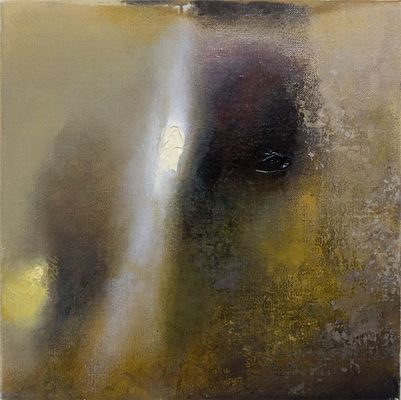
To return to Buckley’s fragment, the first two lines very much evoke how I paint nowadays. As you age, detail diminishes and patches of light become more luminous and float. I feel the most honest way of dealing with this is by smearing the oil paint on the canvas with the fingers and working close-up, blind. Only if the patches coalesce into an approaching image can the work gain a life.
-
Jonathan Walker was born in Melbourne, Australia and brought up on a dairy farm in Gippsland. In the 1970’s he studied painting at RMIT and won the Harold Wright Scholarship to the British Museum, London. During the 1980’s he exhibited at Pinacotheca Gallery, Richmond and had work shown at the NGV and Heidi City Art Gallery. Over the same period he designed the cover for the “Epigenesi” LP by Giancarlo Toniutti, Italy and conducted a mail exchange work with Achim Wollscheid, Germany. The work with artists through the post resulted in an article published in the bicentenary issue of Art and Australia 1988. He showed in artist run spaces such as WestSpace in the 90’s and 2000’s, and until 2012, taught painting at Victoria University, which is where we (Colleen Ahern and Lisa Radford) as organisers of the exhibition, among many others, had the privilege of being his student.
Walker’s knowledge was imparted to students through the careful selection of music, literature, and artists found in books that he himself had ordered for the library. Walker’s strategy was the generosity of sharing his vast knowledge with references specific to each student and their context.
Walker’s paintings share a similar focus and intimacy.
This exhibition presents a small selection of recent paintings alongside a publication that includes Walker’s writing. Observational and analytical, Walker’s work is a type of material notation — the time of day, colour and how it is blended, the both specific and fleeting location of a reflection on lino or the question of whether a chair leg should be included in a painting.
Please join us on Friday August 21 between 6-8pm to celebrate the opening of the exhibition.
Curated by Colleen Ahern and Lisa Radford.
B. Wurtz
Curated by Nic Tammens
March 26 - April 4, 2015
B.Wurtz works from a basement studio in his home on Manhattan’s Lower East Side.
This local fact is attested to by the plastic shopping bags and newsprint circulars that appear in his work. As formal objects, they don’t make loud claims about their origins but nonetheless transmit street addresses and places of business from the bottom of this long thin island. Like plenty of artists, Wurtz is affected by what is local and what is consumed. His work is underpinned by this ethic. It often speaks from a neighborhood or reads like the contents of a hamper:
“BLACK PLUMS $1.29 lb.”
“Food Bazaar”
“USDA Whole Pork Shoulder Picnic 99c lb.”
“RITE AID Pharmacy, with us it’s personal.”
“H. Brickman & Sons.”
“Sweet Yams 59c lb."
Most of the work in this exhibition was made while the artist was in residence at Dieu Donne, a workshop dedicated to paper craft in Midtown. Here Wurtz fabricated assemblages with paper and objects that are relatively lightweight, with the intention that they would be easily transportable to Australia. This consideration isn’t absolute in Wurtz’s work, but was prescriptive for making the current exhibition light and cheap. Packed in two boxes, these works were sent from a USPS post office on the Lower East Side and delivered to North Melbourne by Australia Post.
Wurtz appears courtesy of Metro Pictures, New York.
Thanks to Rob Halverson, Joshua Petherick, Sari de Mallory, Matt Hinkley, Helen Johnson, Fayen d'Evie, Ask Kilmartin, Lisa Radon, Ellena Savage, Yale Union, and "Elizabeth".
John Nixon
"Archive"
December 15 - January 20, 2014
The presentation of John Nixon's archive offered a rare showcase of this extensive collection of the artist's own publications, catalogues, posters, ephemera, editions and more, from the mid 1980s onwards, alongside a selection of his artworks.
Organized by John Nixon, Joshua Petherick and Matt Hinkley.
<a href=http://wfb.public-office.info/artist/john-nixon>All titles by John Nixon
"Habitat"
at Minerva, Sydney (organised by Joshua Petherick and Matt Hinkley)
November 15 - December 20, 2014
Lupo Borgonovo, Janet Burchill & Jennifer McCamley,
Lewis Fidock, HR Giger, Piero Gilardi, Veit Laurent Kurz,
Cinzia Ruggeri, Michael E. Smith, Lucie Stahl, Daniel Weil, Wols
Press Release:
“...It contained seven objects. The slender fluted bone, surely formed for flight, surely from the wing of some large bird. Three archaic circuitboards, faced with mazes of gold. A smooth white sphere of baked clay. An age-blackened fragment of lace. A fingerlength segment of what she assumed was bone from a human wrist, grayish white, inset smoothly with the silicon shaft of a small instrument that must once have ridden flush with the surface of the skin - but the thing’s face was seared and blackened.”
William Gibson, “Count Zero”, 1986
"Autumn Projects Archive"
Curated by Liza Vasiliou
March 6 - March 15, 2014
World Food Books, in conjunction with the Virgin Australia Melbourne Fashion Festival 2014, presented the Autumn Projects archive, consisting of a selection of early examples in Australian fashion with a particular interest in collecting designers and labels from the period beginning in the 1980’s, who significantly influenced the discourse of Australian Fashion.
Curated by Liza Vasiliou, the exhibition provided a unique opportunity to view pieces by designers Anthea Crawford, Barbara Vandenberg, Geoff Liddell and labels CR Australia, Covers, Jag along with early experimental collage pieces by Prue Acton and Sally Browne’s ‘Fragments’ collection, suspended throughout the functioning World Food Books shop in Melbourne.
H.B. Peace
presented by CENTRE FOR STYLE
November 14, 2013
"Hey Blinky, you say chic, I say same"
Anon 2013
H.B. Peace is a clothing collaboration between great friends Blake Barns and Hugh Egan Westland. Their pieces explore the divergences between 'character’ and ‘personality’ in garments....etc
Special Thanks to Joshua Petherick and Matt Hinkley of WFB and Gillian Mears
and a Very Special Thank you to Audrey Thomas Hayes for her shoe collaboration.
Janet Burchill & Jennifer McCamley
"Aesthetic Suicide"
May 10 - June 8, 2013
The first of our occasional exhibitions in the World Food Books office/shop space in Melbourne, "Aesthetic Suicide" presented a body of new and older works together by artists Janet Burchill & Jennifer McCamley, including videos, prints, a wall work, and publications.
During shop open hours videos played every hour, on the hour.
2025, English
Softcover, 640 pages, 24 x 16.99 cm
Published by
Intellect Ltd / US
$110.00 - In stock -
Industrial music has long been recognized for its sonic innovations, but the radical visual culture that accompanied this underground movement has remained largely unexplored. Shock Factory: The Visual Culture of Industrial Music presents the first comprehensive examination of how industrial artists created a coherent aesthetic language across multiple media—from xerox art and mail art to installation and performance—fundamentally challenging modernist utopias while prophetically anticipating contemporary discourse about media manipulation and technological control.
Emerging in mid-1970s Britain from the post-punk underground before expanding globally throughout the 1980s, artists like Throbbing Gristle, Cabaret Voltaire, SPK, Test Dept, Laibach, Einstürzende Neubauten, Nurse With Wound, Current 93, Coil, Psychic TV, Boyd Rice, Whitehouse, Merzbow, Hijokaidan, Hunting Lodge, Controlled Bleeding, Hafler Trio, Z'EV, Nocturnal Emissions, 23 Skidoo, Clock DVA, Master/Slave Relationship, and Monte Cazazza developed sophisticated visual strategies that matched their abrasive soundscapes with equally confrontational imagery.
At 640 pages, this award-winning monograph reveals how industrial artists systematically appropriated reprographic techniques—particularly xerox art and photocollage—to create disturbing visual narratives investigating mind control, criminality, occultism, pornography, psychiatry, and totalitarianism. Through détournement strategies borrowed from Situationist theory, they exposed the coercive mechanisms of mass media and technological society, creating a visual vocabulary that challenged viewers to confront uncomfortable truths about modern power structures. What emerges is a movement that perceptively anticipated contemporary concerns about surveillance, media manipulation, and collective psychological control. Industrial artists' exploration of these themes through deliberately provocative imagery served not as mere provocation but as sophisticated critique of the very media systems they inhabited. Their radical aesthetic choices—degraded reproduction quality, found imagery manipulation, shock tactics—created hybrid forms that defied traditional categorization while establishing independent networks that bypassed conventional art world structures.
Shock Factory positions industrial music's visual culture within broader art historical narratives, revealing connections to Dada, Surrealism, and conceptual art while demonstrating the movement's unique contributions to contemporary visual culture. The book arrives at a moment when questions about technology, media manipulation, and social control have never been more urgent, demonstrating how these artists' radical visual strategies continue to offer valuable insights for our digital age.
For scholars of contemporary art, music history, and media studies, this book provides essential documentation of an overlooked movement that significantly influenced subsequent artistic developments. For readers interested in underground culture and avant-garde aesthetics, Shock Factory reveals the sophisticated visual thinking that accompanied one of the most innovative musical movements of the past half-century.
"A history of industrial music needed to be written. Nicolas Ballet has accomplished this. Thoroughly. This is the book's greatest strength. It explores the significance of noise as a reflection of a world in decay and screaming as a need. And doing it so it reveals a significant connection between industrial music and contemporary art. This is also what makes it an essential book: its contribution to dismantling categories and rethinking history from mixed creative territories."—David G. Torres
Nicolas Ballet is an art historian and assistant curator at the Centre Pompidou in the New Media Department. He is the author of books and articles exploring the visual and sonic contributions of countercultures and experimental artistic practices.
2025, English
Softcover, 386 pages, 23.2 x 17 cm
Published by
Smalltown Supersound / Oslo
$85.00 - In stock -
New and updated edition of Johannes Rød’s landmark guide to Free Jazz & Improv labels originally compiled and published in 2014 (copies of that first edition will set you back $$$), and now massively expanded for this new edition. 428 pages. Johannes Rød returns with the massively expanded edition of his essential guide - a monument of discographic research spanning six decades of creative music documentation. 381 pages plus 47 unnumbered pages of label artwork. 185 labels mapped with obsessive detail and passionate advocacy. From the explosive emergence of free jazz in the mid-1960s through ESP-Disk, BYG Actuel, and Actuel, through the European improvisers' movement documented by FMP, Incus, ICP, and Po Torch, to contemporary operations like Clean Feed, Trost Records, Astral Spirits, and Smalltown Supersound.
This is not just catalogue information. This is cultural history. Each label entry captures aesthetic vision, cultural context, the networks of musicians and presenters that made each imprint distinctive. Rød understands that free jazz culture has always been about more than just the music in the grooves - from Absinth Records' handpainted sleeves to FMP's iconic covers by Annette Peacock and Paul Lovens, this book documents the visual beauty alongside the sonic radicalism.
When Rød's Free Jazz and Improvisation on Vinyl 1965-1985 appeared in 2014, it immediately became the essential companion for anyone navigating the vast landscape of creative music documentation. This 2025 edition is the complete map. Hundreds of catalogue entries. Geographical, cultural, and ideological perspectives spanning American pioneers (Savoy, Blue Note's avant-garde excursions), European explosions, Japanese radicalism (DIW, PSF), Scandinavian innovations (Odin, Circulasione Totale).
With a foreword by Mats Gustafsson who writes: "DIG IN, enjoy and start your own research. It is all in front of you! Johannes Rød has created a unique possibility for all of us. It is a deep well of knowledge and music. It is the most FUN ride you can make: into the (un)known world of improvised music!"
As Joakim Haugland of Smalltown Supersound notes in his introduction, free jazz has been "the spine of the label, that holds it all together" - always present, always essential. This book is that spine made visible, tangible, researchable. It's information and inspiration in equal measure.
In an era when streaming platforms flatten everything into algorithmic sameness, when the physical object threatens to become mere nostalgia, this book reminds us why labels matter - why curatorial vision, aesthetic presentation, and committed documentation are crucial to creative music's survival and flourishing.
A landmark publication.
1998, English / French / Italian
Hardcover + CD (12'23"), 40 pages, 24 x 17 cm
1st Edition, Out of print title / used / very good
Published by
Alga Marghen / Milan
$100.00 - In stock -
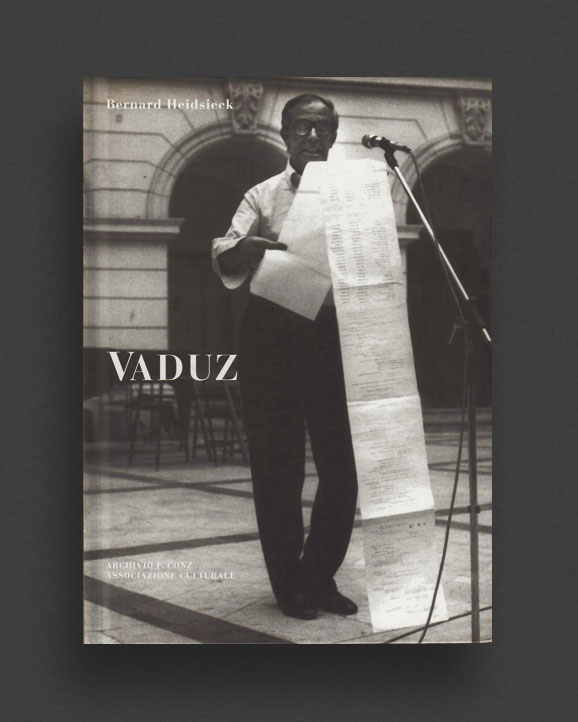
First, 1998 hardcover edition, published and printed in Italy, long out-of-print.
This poem by Bernard Heidsieck starts with Vaduz, the capital of Lichtenstein, and from it, lists all the people and ethnic groups of the world: a great humanist work and an extreme experience of poetry-action. The publication features a recording of the poem, read by Bernard Heidsieck.
Composed June to December 1974 and recorded on a Revox A 700 at author's studio. Commissioned by Roberto Altman in 1974 to celebrate the inauguration of the Art Foundation in Vaduz, capital of the state of Liechtenstein. 40 pages book with CD.
Bernard Heidseick (1928-2014) was a French sound poet, associated with various movements throughout a long career: including Beat, Fluxus, and minimalism. Heidseick decided in the mid-1950s to break off from written poetry, and to bring it outside of books. He opposed passive poetry to active poetry, to an “on its feet” poetry, in his own words. Starting in 1955 he was one of the founders of Sound Poetry, and in 1962 of Action Poetry. As early as 1959 he used a tape recorder as an additional means for writing and retransmitting, opening his research to new experimental fields. While remaining concerned with semantics, Bernard Heidseick became increasingly independent from the constraints of language. He explored all its formal aspects, either by spatializing the text in his written scores, or by the presence of his body in space. He gave sound a formal dimension, notably through an exceptional diction based as much on breathing as on articulating perfectly or on constantly renewing the inflections of his voice. As the years went by he reinvented his writing in order to render our daily life more accurately. Our social, political or economical universe, through its main events, as well as through its extreme ordinariness. In 1955 he developed his first Score-Poems. He then worked continuously on series, with the 13 Biopsies between 1966 and 1969. From 1969 to 1980, he created the 29 Passe-Partout (Catch-alls). From 1978 to 1986, he wrote Derviche/Le Robert (Dervish/Le Robert) composed of 26 sound poems. Then, beginning in 1988, Respirations et brèves rencontres ( Respiration and Brief Encounters) (60 poems created from the archives of recordings of artists' breathing). He organised the first international festival of sound poetry in 1976 and the event Rencontres Internationales 1980 de poésie sonore which took place in Rennes, in Le Havre and at the Pompidou Centre in Paris.
He has organized over 540 public readings of his texts in twenty different countries.
As New, light storage wear only.
2009, French / English
Hardcover (w. audio CD), 90 pages, 21 x 15 cm
Ed. of 350, hand-numbered,
Published by
Alga Marghen / Milan
$60.00 - In stock -
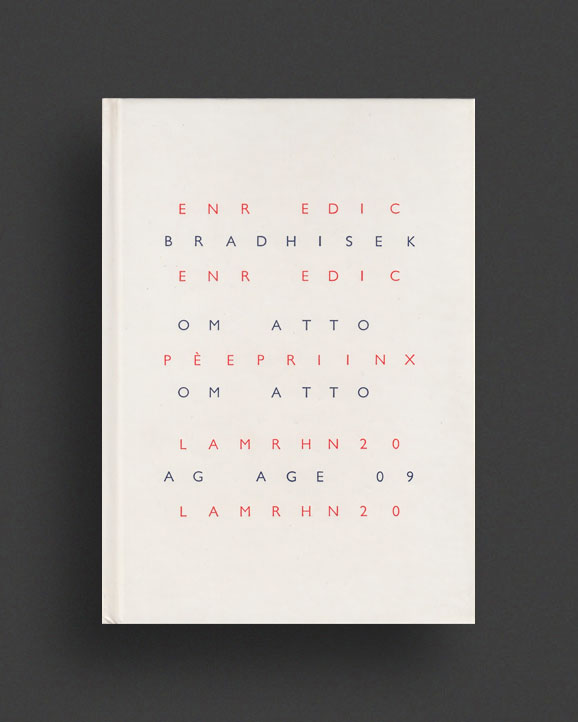
Limited edition book and CD presentation of Bernard Heidsieck's Poème-Partition "X", bound in hardcover in a hand-numbered edition of 350 copies. Recorded 1960, this publication of the work plus CD of the original 1960 recording and later 1962 performance (accompanied by saxophone improvisation by American painter Larry Rivers) were issued in this deluxe volume in 2009 by Alga Marghen, Milan. Heidsieck (1928—2014) was one of the greatest French poets of the 20th century and an originator of the sound poetry movement.
Bernard Heidseick (1928-2014) was a French sound poet, associated with various movements throughout a long career: including Beat, Fluxus, and minimalism. Heidseick decided in the mid-1950s to break off from written poetry, and to bring it outside of books. He opposed passive poetry to active poetry, to an “on its feet” poetry, in his own words. Starting in 1955 he was one of the founders of Sound Poetry, and in 1962 of Action Poetry. As early as 1959 he used a tape recorder as an additional means for writing and retransmitting, opening his research to new experimental fields. While remaining concerned with semantics, Bernard Heidseick became increasingly independent from the constraints of language. He explored all its formal aspects, either by spatializing the text in his written scores, or by the presence of his body in space. He gave sound a formal dimension, notably through an exceptional diction based as much on breathing as on articulating perfectly or on constantly renewing the inflections of his voice. As the years went by he reinvented his writing in order to render our daily life more accurately. Our social, political or economical universe, through its main events, as well as through its extreme ordinariness. In 1955 he developed his first Score-Poems. He then worked continuously on series, with the 13 Biopsies between 1966 and 1969. From 1969 to 1980, he created the 29 Passe-Partout (Catch-alls). From 1978 to 1986, he wrote Derviche/Le Robert (Dervish/Le Robert) composed of 26 sound poems. Then, beginning in 1988, Respirations et brèves rencontres ( Respiration and Brief Encounters) (60 poems created from the archives of recordings of artists' breathing). He organised the first international festival of sound poetry in 1976 and the event Rencontres Internationales 1980 de poésie sonore which took place in Rennes, in Le Havre and at the Pompidou Centre in Paris.
As New.
2001, French
Softcover (w. audio CD + print insert), 64 pages, 21 x 15 cm
Ed. of 500,
1st Edition, Out of print title / as new
Published by
Le Corridor Bleu / Nîmes
$50.00 - In stock -
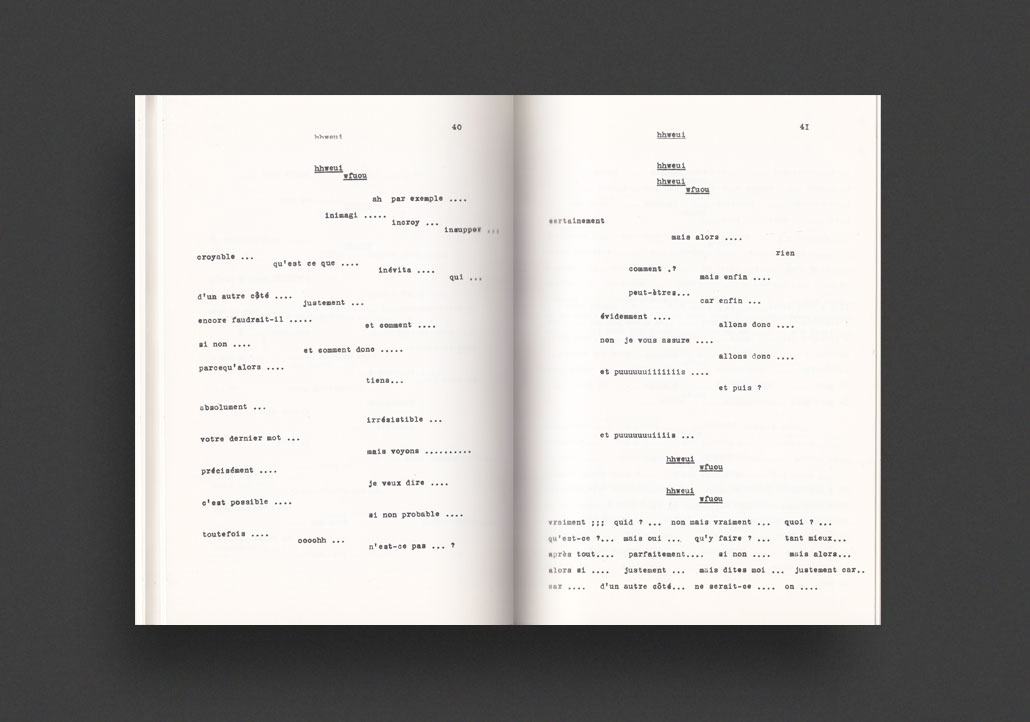
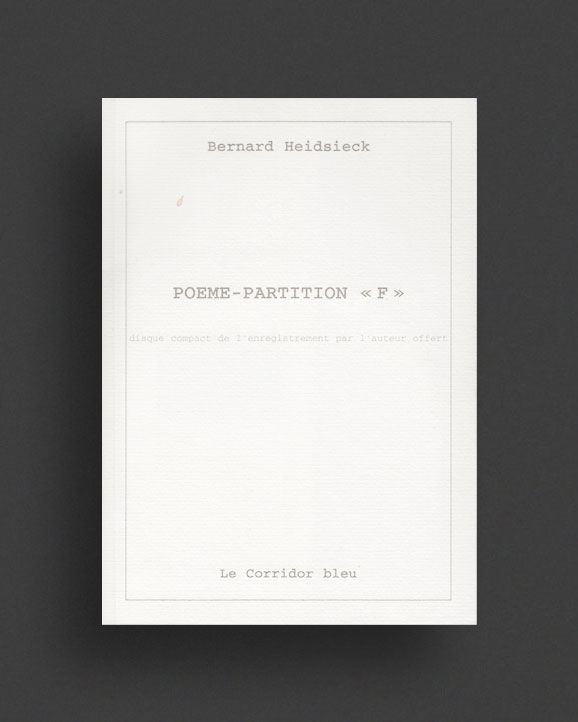
Limited edition book and CD presentation of Bernard Heidsieck's Poème-Partition "F" with print insert. Written 1957 and recorded 1960, this publication was issued in an edition of 500 in 2001 by Le Corridor Bleu, Nîmes. Includes an additional introduction by Heidsieck (1928—2014) himself, one of the greatest French poets of the 20th century, and an originator of the sound poetry movement.
Bernard Heidseick (1928-2014) was a French sound poet, associated with various movements throughout a long career: including Beat, Fluxus, and minimalism. Heidseick decided in the mid-1950s to break off from written poetry, and to bring it outside of books. He opposed passive poetry to active poetry, to an “on its feet” poetry, in his own words. Starting in 1955 he was one of the founders of Sound Poetry, and in 1962 of Action Poetry. As early as 1959 he used a tape recorder as an additional means for writing and retransmitting, opening his research to new experimental fields. While remaining concerned with semantics, Bernard Heidseick became increasingly independent from the constraints of language. He explored all its formal aspects, either by spatializing the text in his written scores, or by the presence of his body in space. He gave sound a formal dimension, notably through an exceptional diction based as much on breathing as on articulating perfectly or on constantly renewing the inflections of his voice. As the years went by he reinvented his writing in order to render our daily life more accurately. Our social, political or economical universe, through its main events, as well as through its extreme ordinariness. In 1955 he developed his first Score-Poems. He then worked continuously on series, with the 13 Biopsies between 1966 and 1969. From 1969 to 1980, he created the 29 Passe-Partout (Catch-alls). From 1978 to 1986, he wrote Derviche/Le Robert (Dervish/Le Robert) composed of 26 sound poems. Then, beginning in 1988, Respirations et brèves rencontres ( Respiration and Brief Encounters) (60 poems created from the archives of recordings of artists' breathing). He organised the first international festival of sound poetry in 1976 and the event Rencontres Internationales 1980 de poésie sonore which took place in Rennes, in Le Havre and at the Pompidou Centre in Paris.
As New with tiny little coffee drip mark to cover.
2026, English
Softcover, 592 pages, 24 x 17 cm
Published by
Perimeter Editions / Melbourne
Gertrude Contemporary / Melbourne
$69.00 - In stock -
Gertrude is a contemporary visual art centre and studio complex in Naarm Melbourne, dedicated to risk and ambition. Gertrude’s model has influenced how contemporary art is supported and presented in Australia, and demonstrates a sustained institutional support for experimental practice. Co-published by Gertrude and Perimeter Editions, Dredging up the Past indexes its exhibitions from 2005 to 2025, and its studio and exhibiting artists from 1983 to 2025.
Edited by Sharon Flynn, and designed by Narelle Brewer, Dredging up the Past follows on from Gertrude’s previous twenty-year history, A Short Ride in a Fast Machine (2005), edited by Charlotte Day. An exercise in methodical indexing and recording, this 592-page tome covers every exhibition from the last two decades, alongside documentation of programs and projects, colloquial photographs, and creative and critical texts by the likes of James Nguyen, Nat Thomas, Kim Donaldson, and current directors Mark Feary and Tracy Burgess. In addition, a polyphonic text titled ‘Risk Contemporary’ draws on the contributions of former directors, curators, staff, studio artists, and board members to share anecdotes of conceptual risk during their time associated with Gertrude. The book closes with a vast ‘Catalogue of Personnel’ – a nod to the thousands of humans to have contributed to the organisation’s ecosystem from 1983 until 2025.
Dredging up the Past – which takes its title from the Richard Bell exhibition that inaugurated the first full year of programming at Gertrude’s current site in Preston South in 2018 – feels an apt description for the underpinnings of this book. Rather than reducing history to the stories of a few, this is about recording everything possible and affording it equal importance. This is no highlight reel; it is an excavation of each brick in Gertrude’s foundations.
2014, English
Softcover, 240 pages, 145 x 210 mm
1st Edition, Out of print title / used / very good
Published by
The MIT Press / Massachusetts
Whitechapel / London
$65.00 - In stock -
Out of print volume of Documents of Contemporary Art Series tracing the identification of art with sexual expression or repression, from the era of the rights movements to the present.
It has been argued, most notably in psychoanalytic and modernist art discourse, that the production of works of art is fundamentally driven by sexual desire. It has been further argued, particularly since the early 1970s, that sexual drives and desires also condition the distribution, display and reception of art.
This anthology traces how and why this identification of art with sexual expression or repression arose and how the terms have shifted in tandem with artistic and theoretical debates, from the era of the rights movements to the present. Among the subjects it discusses are abjection and the “informe,” or formless; pornography and the obscene; the performativity of gender and sexuality; and the role of sexuality in forging radical art or curatorial practices in response to such issues as state-sponsored repression and anti-feminism in the broader social realm.
Artists surveyed include:
Vito Acconci, Assume Vivid Astro Focus, Lynda Benglis, Louise Bourgeois, Gerard Byrne, George Chakravarthi, Judy Chicago, Vaginal Davis, Wim Delvoye, Elmgreen & Dragset, Valie Export, Félix González-Torres, Guillermo Gómez-Peña, Harmony Hammond, Claudette Johnson, Mary Kelly, Yayoi Kusama, Robert Legorreta, Paul McCarthy, Sarah Maple, Shirin Neshat, Lorraine O’Grady, Yoko Ono, Catherine Opie, Orlan, William Pope.L, Miriam Schapiro, Carolee Schneemann, Joan Semmel, Barbara Smith, Annie Sprinkle, Alina Szapocznikow, Del LaGrace Volcano, Hannah Wilke, David Wojnarowicz
Writers include:
Malek Alloula, Norman O. Brown, Judith Butler, Douglas Crimp, Angela Dimitrakaki, Michel Foucault, Daniel Guérin, Eleanor Heartney, Jonathan D. Katz, Rosalind Krauss, Julia Kristeva, Paweł Leszkowicz, Herbert Marcuse, Kobena Mercer, Laura Mulvey, Lawrence Rinder, Jacqueline Rose, Eve Kosofsky Sedgwick, Susan Sontag, Trinh T. Minh-ha, Stephen Whittle
About the Editor
Amelia Jones is Grierson Chair in Art History and Communication Studies at McGill University. Her books include Irrational Modernism: A Neurasthenic History of New York Dada (MIT Press), Self/Image: Technology, Representation and the Contemporary Subject, and Seeing Differently: A History and Theory of Identification and the Visual Arts.
VG copy.
2003, English
Softcover, 310 pages, 21.5 x 13.5 cm
1st Edition, Out of print title / used / very good
Published by
Creation Books / London
$150.00 - Out of stock
Rare first 2003 English Edition of Artaud's Heliogabalus, published by Creation Books.
Translated into English for the first time, this novelized biography of the 3rd-century Roman Emperor Heliogabalus is simultaneously Artaud’s most accessible and his most extreme book. Written in 1933, at the time when Artaud was preparing to stage his legendary Theatre of Cruelty, Heliogabalus is a powerful concoction of sexual excess, self-deification and terminal violence. Reflecting its author’s preoccupations with the occult, magic, Satan, and a range of esoteric religions, this account of Heliogabalus’ reign invents incidents in the Emperor’s life in order to make the print of the author’s own passionate denunciations of modern existence.
Heliogabalus is Artaud’s greatest and most revolutionary masterpiece: an incendiary work that reveals both the divine cruelty of the Roman Emperor and that of Artaud himself.–Stephen Barber
Very Good copy.
1997, English
Softcover, 418 pages, 22 x 14 cm
Out of print title / used / good
Published by
John Calder / London
$35.00 - In stock -
1997 reprint of this 1959 Calder collection of Beckett's classic trilogy of novels: Molloy, Malone Dies, The Unnamable. Awarded the Nobel Prize for Literature 1969.
The trilogy has always been considered the central work of Samuel Beckett's fiction, the three novels that have been most admired and have received the greatest amount of critical comment, just as Waiting for Godot, written in the same period of concentrated creativity between 1947 and 1949, is central to Beckett's drama. After Proust's great many-volumed novel, Joyce's Ulysses and the masterworks of Kafka, it dominates twentieth-century literature, and much as Beckett's pre-war fiction and the late minimalist novellas are admired, it is on the trilogy that the author's reputation will chiefly depend.
Molloy was a new departure for Samuel Beckett; written in the first person, it consists of two monologues, that of bedridden Molloy on his odyssey towards his mother, lost in town and country and finally emerging from the forest, and that of Moran, a private detective who is sent to find him. The two narrowly miss each other, but the contrast between their characters, and the similarity of their decline give the reader much ground to speculate and much humour towards understanding both the grimness and the comedy of the human situation.
Malone Dies pictures the decrepit Malone, also bedridden, waiting to die and filling his mind and his remaining time with memories, stories and bitter comment, while waiting for 'the throes'. The novel disintegrates as the protagonist does.
The Unnamable seems to contain and encompass its predecessors and the characters of earlier Beckett novels. Its power of language and breadth of imagination make it a tour de force that recalls Dante as it moves into an ever greater void of despair and panic, a metaphysical work that must take its place among the very greatest works of literature. Its dramatic power has been proved by the successful endeavours of those actors who have specialised in Beckett's work to bring it, and earlier parts of the trilogy, to the stage, or to life on the radio. Patrick Magee, Jack Magowran, Jack Emery, Barry McGovern and Max Wall are only a few of the actors who have become closely associated, with all or parts of the trilogy.
G—VG copy. Very light wear/very light rippling to a few initial page edges.
1974, Japanese
Softcover (staple–bound), 90 pages, 21 x 15 cm
1st Edition, Out of print title / used / very good
Published by
Spin / Tokyo
$45.00 - Out of stock
Rare copy of Dabu–dabo No. 24, published in Tokyo in 1974, with original cover art painted by Aquirax Uno (Akira Uno). Dabu-dabo was wild countercultural lifestyle magazine ("A Lifestyle Catalog of Dawn Culture") that featured artwork, photography, manga and articles that proposed "new human life materials for the global village." This issue features Japanese jazz and blues singer/composer Maki Asakawa, actress/singer/politician Chinatsu Nakayama, pink actress Chiho Yuki, photography by Masaaki Nakagawa, Araki Nobuyoshi, illustration galleries by Yōji Kuri, Shizuichi Hayashi, Ryuzan Aki, folk singer Itsuro Shimoda (of Shimonsai and Tokyo Kid Brothers), Ryōhei Uchida, singer Mari Natsuki, Yonin Bayashi (rock group), singe/director Morio Agata, articles on how to grow marijuana, how to improve your jeans, how to make a lie detector, how to find out about psychic abilities, how to cure men's (sexual) illnesses, how to cure women's (sexual) illnesses, how to make candles, how to make shoes, how to raise chickens, how to make a flying horse, and how to spend time well in jail, and much more. Like Goro meets CoEvolution Quarterly via Oz!
VG with light wear to extremities, rusted staples.
1974, Japanese
Softcover (staple–bound), 90 pages, 21 x 15 cm
1st Edition, Out of print title / used / very good
Published by
Spin / Tokyo
$45.00 - Out of stock
Rare copy of Dabu–dabo No. 25, published in Tokyo in 1974, with original cover art painted by Aquirax Uno (Akira Uno). Dabu-dabo was wild countercultural lifestyle magazine ("A Lifestyle Catalog of Dawn Culture") that featured artwork, photography, manga and articles that proposed "new human life materials for the global village." This issue features an interview with author/model/actress/icon Izumi Suzuki, photography by Hajime Sawatari, jazz musician Sadao Watanabe, illustration galleries by avant–garde artist and author Genpei Akasegawa, Ayumi Ohashi and Teruya Harada, Hiro Tsunoda of the Sadistic Mika Band and psych legends Jacks, nude photography by Kenji Hiruma, poet and folk singer Shigeru Izumiya, a host of informative feature articles on "Commune Practices": developing commune practices, including the use of geodesic domes and inflatable housing, the farming practices of Japanese folk singer Masato Minami, DIY solar thermal devices, and much more. Like Goro meets CoEvolution Quarterly via Oz!
VG with light wear to extremities, rusted staples.
2025, English
Hardcover, 88 pages, 17.8 x 12.1 cm
Published by
Further Reading Library / New York
$55.00 - In stock -
An avant-garde comrade of Jonas Mekas, George Maciunas, Jack Smith and others, Richard Foreman was at the forefront of downtown New York’s experimental theatre scene of the 1960s. He wrote and directed more than 80 verbally and visually singular productions in a career that spanned 45 years.
Handwritten on a series of note cards, the aphoristic declarations and philosophical asides of this text hover between a stream-of-consciousness dialogue and a message sent from another world. Foreman’s visually arresting plays made heavy use of static tableaux, frantic choreography, projected text and Foreman himself sitting in front of the stage operating the lights and sound. Foreman’s wonderfully elliptical words are counterposed with photographs of the mystifying diorama-like maquettes that he created while staging a number of his plays.
THE FURTHER READING LIBRARY is an ongoing series of books dedicated to forgotten ideas, overlooked accomplishments, and idiosyncratic world views. Each book explores — through a collection of original documents, photographs, and primary source material — a body of work, a specific topic, or an individual. Modeled on the size and range of topics of the King Penguin and Insel-Bücherei series, The Further Reading Library is edited by Christine Burgin and Andrew Lampert.
Christine Burgin is a publisher and former gallerist. Her publications include books by Hilma af Klint, Robert Walser, Emily Dickinson, and Susan Howe and projects with artists Rodney Graham, Matt Mullican, and Allen Ruppersberg.
christineburgin.com
Andrew Lampert is an artist, writer, and curator. His moving-image, photo, and performance works have been widely exhibited at international venues, and he has edited books on Tony Conrad, George Kuchar, and Harry Smith, among others. The former Curator of Collections at Anthology Film Archives, Lampert is co-author with Howie Chen of the advice columns Hard Truths and Hard Choices for Art in America.
2025, English
Hardcover, 88 pages, 17.8 x 12.1 cm
Published by
Further Reading Library / New York
$50.00 - In stock -
Loïe Fuller’s (1862–1928) luminously radical dance performances at the turn of the century were unlike anything that had ever been staged or seen before. While her profound influence on writers and artists such as Mallarmé and Rodin is well documented, less well known is Fuller’s passion for technology and her involvement with the leading scientists of the time. This title spotlights Fuller’s scientific forays in her own words alongside an array of archival documents and photographs of the dancer in action.
In her 'Serpentine Dance', she wore a large, diaphanous gown she manipulated with her arms to form undulating waves, while coloured lights projected onto the fabric gave the illusion of birds, animals or flowers. The centrepiece of the book is her 1907 lecture on the invention of radium, her notes on meeting Marie and Pierre Curie and Thomas Alva Edison, and her literally explosive efforts to create a glow-in-the-dark dance performance.
Featuring an introduction by renowned cinema scholar Tom Gunning, this book presents Fuller’s eccentric passions and pioneering pursuits in a fresh light.
THE FURTHER READING LIBRARY is an ongoing series of books dedicated to forgotten ideas, overlooked accomplishments, and idiosyncratic world views. Each book explores — through a collection of original documents, photographs, and primary source material — a body of work, a specific topic, or an individual. Modeled on the size and range of topics of the King Penguin and Insel-Bücherei series, The Further Reading Library is edited by Christine Burgin and Andrew Lampert.
Christine Burgin is a publisher and former gallerist. Her publications include books by Hilma af Klint, Robert Walser, Emily Dickinson, and Susan Howe and projects with artists Rodney Graham, Matt Mullican, and Allen Ruppersberg.
christineburgin.com
Andrew Lampert is an artist, writer, and curator. His moving-image, photo, and performance works have been widely exhibited at international venues, and he has edited books on Tony Conrad, George Kuchar, and Harry Smith, among others. The former Curator of Collections at Anthology Film Archives, Lampert is co-author with Howie Chen of the advice columns Hard Truths and Hard Choices for Art in America.
2016, English
Hardcover, 88 pages, 17.8 x 12.1 cm
Published by
Further Reading Library / New York
$50.00 - Out of stock
'Library of the Paranormal' lifts the lid on Jackie Gleason's treasure trove of arcana. A generous selection of colourful and quizzical covers from Charles Fort, L. Ron Hubbard and dozens more are reproduced alongside press excerpts and interviews in which Gleason manages to shoehorn his thoughts on ESP, aliens, life after death and other decidedly off-topic interests, including his failed plans in the early ’50s to produce a television show devoted to paranormal experiences.
Comic legend Jackie Gleason (1916–87) was one of the biggest, most beloved and best paid stars of his time. His role as Ralph Kramden in 'The Honeymooners' remains a veritable classic of television’s early days. As big as his star was, Gleason never shied away from one of his favourite, non-mainstream topics: the occult. A high school dropout with a photographic memory and a major case of insomnia, he was an avid reader and spiritual searcher who looked for answers in the most unexpected places. Gleason was also a confirmed sceptic who believed that some grand cosmic scheme existed, but he could not say what it might ultimately be. Additionally, Gleason amassed a staggering collection of over 3,000 esoteric books, ranging from scholarly studies to supermarket paperbacks, now part of the holdings of the University of Miami Special Collections Library.
THE FURTHER READING LIBRARY is an ongoing series of books dedicated to forgotten ideas, overlooked accomplishments, and idiosyncratic world views. Each book explores — through a collection of original documents, photographs, and primary source material — a body of work, a specific topic, or an individual. Modeled on the size and range of topics of the King Penguin and Insel-Bücherei series, The Further Reading Library is edited by Christine Burgin and Andrew Lampert.
Christine Burgin is a publisher and former gallerist. Her publications include books by Hilma af Klint, Robert Walser, Emily Dickinson, and Susan Howe and projects with artists Rodney Graham, Matt Mullican, and Allen Ruppersberg.
christineburgin.com
Andrew Lampert is an artist, writer, and curator. His moving-image, photo, and performance works have been widely exhibited at international venues, and he has edited books on Tony Conrad, George Kuchar, and Harry Smith, among others. The former Curator of Collections at Anthology Film Archives, Lampert is co-author with Howie Chen of the advice columns Hard Truths and Hard Choices for Art in America.
2001, English
Softcover, 144 pages, 25.5 x 18 cm
Published by
Hips Road / New York
$59.00 - Out of stock
Reviled, rioted over and banned as pornographic even as it was recognized by many as an unprecedented visionary masterpiece, Jack Smith's Flaming Creatures is one of the most important and influential underground movies ever released in America.
J. Hoberman's monograph details the creative making—and legal unmaking—of this extraordinary film, a source of inspiration for artists as disparate as Andy Warhol, Federico Fellini and John Waters.
Described by its maker as "a comedy set in a haunted music studio," the story of Flaming Creatures is here augmented with a dossier of personal recollections, relevant documents and remarkable, previously unpublished on-set photographs by Norman Solomon, alongside photographs and film–stills by Ken Jacobs. Expanding on notes originally prepared for the 1997 retrospective on Jack Smith at the American Museum of the Moving Image, the monograph includes further material on his unfinished features Normal Love and No President, as well as shorter film fragments.
2012, English / German
Softcover (silkscreened), 48 pages, 21.3 x 22.5 cm
Ed. of 800,
Published by
Galerie Buchholz / Köln
$33.00 - In stock -
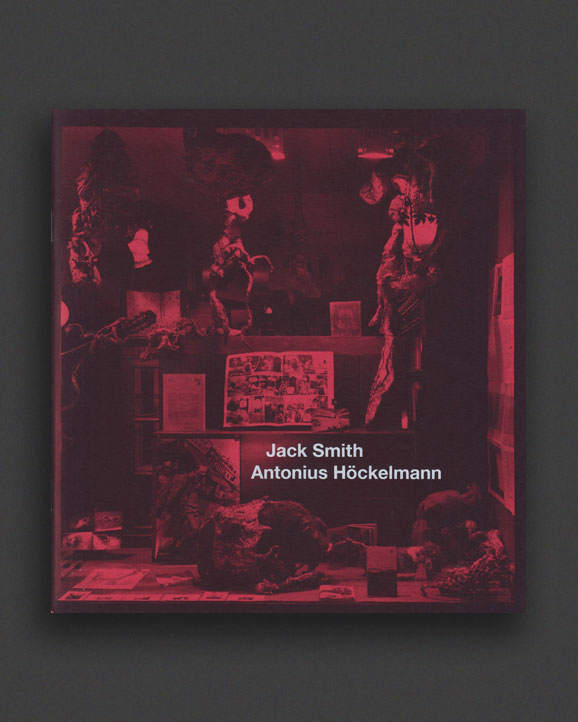
Wonderful publication documenting an exhibition that took place in 2010 in the window of Galerie Buchholz's antiquarian bookstore in Cologne, Germany. Michael Krebber presented here, in collaboration with Sebastian Höckelmann, works by artists Antonius Höckelmann and Jack Smith.
Produced in an edition of 800.
Antonius Höckelmann (1937 – 2000) was a German postwar artist. Höckelmann trained as a wood sculptor from 1951 to 1957 in his native city of Oelde, and studied from 1957 to 1961 at the College of Fine Arts in Berlin with Karl Hartung. In 1977 he participated in the documenta 6, and in 1982 at documenta 7 in Kassel. Many of his works combine sculpture and painting. Wooden sculptures and sculptures made of other materials (bronze, silver foil, straw) were often completely painted.
Jack Smith (1932 – 1989) was an American filmmaker, artist, actor, and pioneer of underground cinema. He is generally acclaimed as a founding father of American performance art, and has been critically recognized as a master photographer, though his photographic works are rare and remain largely unknown. Apart from appearing in his own work, including the legendary Flaming Creatures (1963), Smith played the lead in Andy Warhol's unfinished film Batman Dracula, Ken Jacobs's Blonde Cobra, and appeared in several theater productions by Robert Wilson.
2024, English
Softcover, 416 pages, 21.6 x 13.8 cm
Published by
SPBH Editions / UK
$89.00 $65.00 - In stock -
The cult periodical Little Joe, published as a limited-edition zine from 2010 to 2021, challenged the mainstream narrative of film history with a rebellious, queer perspective. Rather than reviewing new releases, it explored forgotten and overlooked films and celebrated a diverse spectrum of cinema – from obscure art films to porn to Hollywood classics – as worthy of critical debate. Stubbornly print-only, Little Joe was notoriously hard to find, privileging word-of-mouth distribution akin to the films it championed. This volume, compiled by editor-in-chief Sam Ashby, brings together the best of its previously elusive texts and proposes a new, alternative cinematic canon drawn from the fringes of taste and style, while paying homage to the original DIY Risograph aesthetic of the journal.
This volume features essays, in-depth conversations, short stories and archival discoveries from a host of queer and allied writers, artists, filmmakers, and academics, including John Waters, Sarah Schulman, Douglas Crimp, William E. Jones, Erika Balsom, Jeremy Atherton Lin, John Greyson, Elizabeth Purchell, Liz Rosenfeld, Peter Strickland, Ira Sachs, Terence Davies, Shu Lea Cheang, Kevin Killian, Wayne Koestenbaum, Abdellah Taïa, Marlene McCarty, John Cameron Mitchell, Rosa von Praunheim, Stuart Comer, Ed Halter, Jenni Olson, A.L. Steiner, A.K. Burns, Desiree Akhavan, and Andrew Haigh.
1993 / 1998, English
Softcover, 176 pages, 23 x 21.6 cm
1st Edition, Out of print title / used / very good
Published by
Atlas Press / London
$50.00 - Out of stock
First 1993 English edition from the legendary Atlas Press, London, 1998 printing.
"DADA MEANS NOTHING!" So proclaimed Tristan Tzara, the movement's tireless publicist. Yet this did not prevent the most fanatical and talented artists and writers across Europe from rushing to join its ranks. Anti-war, anti-art, anti-dada, from its beginnings in Zurich during the first World War the dadas swept aside the cultural, philosophical and political norms of their time. Utter disgust with a society that had created the war (and then expected to survive the peace) spurred them to ever greater demonstrations of revulsion and derision. Yet it was not all nihilism: many factions worked within the Dada Movement and it was Huelsenbeck's intention to embody most of them in the Dada Almanac. The largest collection of Dadaist texts ever assembled by the movement, it was originally published in 1920 in a mixture of French and German.
The Dada Almanac was truly international in scope, with substantial sections from the Swiss and French sections of the movement, it embodies Dada's failings as well as its successes, its excesses, its seriousness, its idiocy, but above all the anarchic vitality which made it such a vital precondition for so much that followed in the fields of art, literature and general cultural terrorism.
The editors of this first English translation have added dozens of other relevant texts, documents, portraits etc, as well as explaining contemporary references and events and providing biographies of the numerous personalities involved.
Very Good copy, only light wear/age but with some marginalia/underlining.
2024, English
Softcover, 200 pages, 21.6 x 13.9 cm
Published by
Divided Publishing / London
$36.00 - Out of stock
Wrestling with the mind of war, at times shocking in its self-analysis, Wave of Blood is a furious and sincere essay, an eclipse notebook, a family chronicle, all told in the poetry of witness.
Ariana Reines is a poet, playwright, and performing artist from Salem, Massachusetts and based in New York. Her books include A Sand Book—winner of the 2020 Kingsley Tuftfts Award and longlisted for the National Book Award—Mercury, Coeur de Lion, and The Cow, which won the Alberta Prize from Fence in 2006. She has taught poetry at UC Berkeley (Holloway Poet), Columbia, NYU, and Scripps College (Mary Routt Chair), been a visiting critic at Yale School of Art, and for community organizations including the Poetry Project and Poets House. Her poetry and prose have been published in The New Yorker, Poetry, Artforum, Frieze, Harper’s, and many others.
“Ariana Reines is a go-for-broke artist who honors her traditions by being like no one else. Some of us have made a fetish of our stupidity, pretending to forget history, and some of us have made a fetish of despair, congratulating ourselves on melancholia, but Ariana is too brilliant and too alive for either of those sad luxuries . . . I am convinced of the authenticity of the summonses she receives and the summonses she issues and when I read her I am reminded that all of this is a calling before it’s an identity or career. Her voice—which is always more than hers alone—is a dialectic between the very ancient and the bleeding edge...” – Ben Lerner
“Mind-blowing...” – Kim Gordon
“Her writing is queer and raunchy, raw and occult, seemingly never pulling away from her deepest vulnerabilities. Yet Reines simultaneously maintains a feeling of epic poetry, of ancient intention. She moves between worlds in search of the divine and the self...” – The New York Times
1986, Japanese
Softcover (staple-bound), 36.5 x 26 cm
1st Edition, Out of print title / used / good
Published by
Cross Culture Foundation / Tokyo
$25.00 - In stock -
Rare inaugural issue of the almost unknown but incredible Japanese magazine, Rag. Was this the only issue? Published in 1986 in over-sized, staple-bound format, Rag issue 1 includes a beautiful photo feature on Butoh performer Goro Namerikawa, a large feature on "Art's Destroying Angel" Tadanori Yokoo, photography by Nobuyoshi Araki, Keiichi Tahara, Yasushi Handa, Shunji Kaida, Herbie Yamaguchi, Sachiko Kuro, Kaoru Ijima, experimental musician and playwright Koharu Kisaragi, costume designer Michiko Kitamura, designers Issey Miyake, Junko Shimada, musician Eitetsu Hayashi, and much more.
Good copy with some wear to spine/extremities.
1993, Japanese
Softcover, 240 pages, 21 x 15 cm
1st Edition, Out of print title / used / very good
Published by
Atelier Peyotl / Tokyo
$65.00 - Out of stock
"Mannequin" Special Feature Issue of cult Japanese underground magazine Yaso, published in 1993, edited by Yuichi Konno and Atelier Peyotl (publishers of Night Vision/Yaso/Peyotl/Wave/Silvester Club...). Heavily illustrated with texts in Japanese that look at the theme of the mannequin from fashion apparatus to fetish object, automatons to living dolls, including a panoramic photographic history of mannequins, a photo feature of French photographer Bernard Faucon's boy mannequin collection, a huge illustrated article on famous Japanese costume, stage and exhibition designer, and Issey Miyake collaborator Tomio Mohri, the wax anatomical models of dissected corpses by Clemente Michelangelo Susini of Florence (1754–1814) shot by Ryuji Miyamoto, Czech animator Jirí Barta's Klub odlozenych, Japanese model and actress Sayoko Yamaguchi, the living dolls of the Japanese theatre, medical mannequins, crash-test dummies, icons, "Doll Love" and erotic dolls, plus lots more and a lot more Bernard Faucon!
Very Good—Near Fine copy.
2018, English
Softcover, 320 pages, 21.5 x 28.5 cm
Published by
Koenig Books / London
$80.00 - In stock -
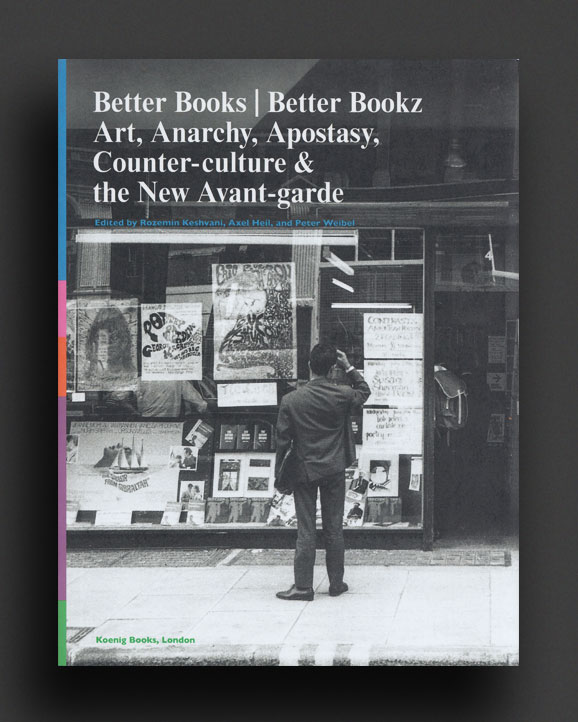
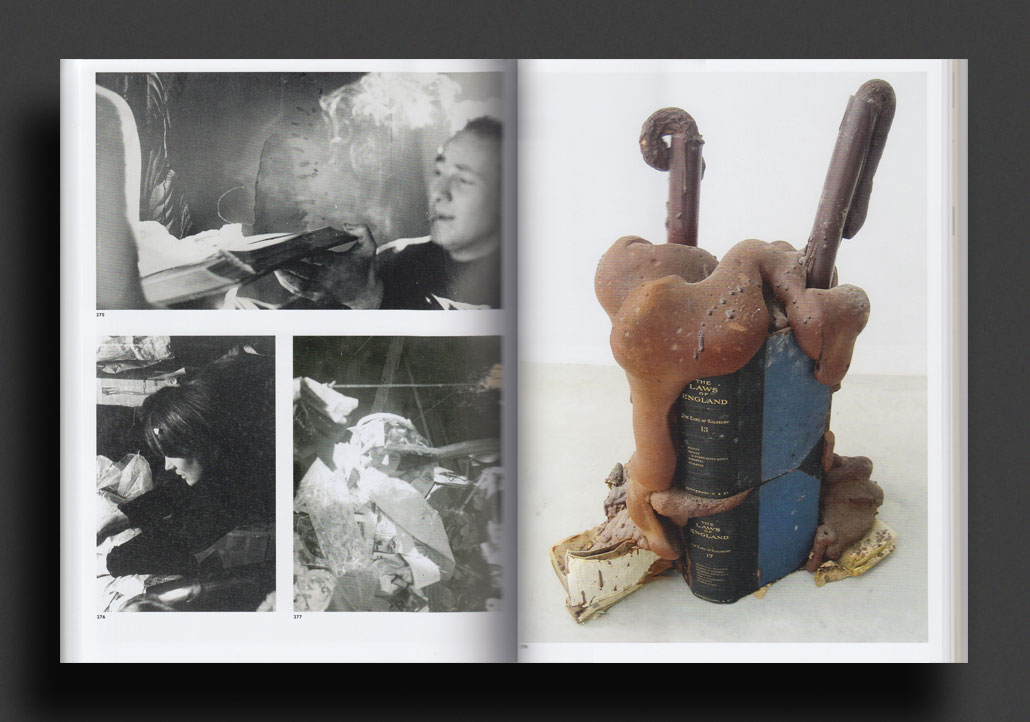
The legendary independent London bookstore Better Books on the Charing Cross Road was the hub for Allen Ginsberg, William S. Burroughs, Alexander Trocchi, John Latham, Jeff Nuttall, Bob Cobbing, Barry Miles, Gustav Metzger, and countless others, for their ideas and approaches to art, film, literature, and activism. With its unique range of books, offbeat events, poetry readings, film screenings, and happenings, Better Books became the hot spot of London’s 1960s counter-culture scene.
This book is the first to examine this special historic moment, combining previously unpublished texts, documents, and photographs with the voices of the protagonists who authored this revolution.
With Essays by Rozemin Keshvani and Barry Miles and contributions by Philip Cohen, Stephen Dwoskin, John Hopkins, Graham Keen, Bruce Lacey, Gustav Metzger, Jeff Nuttall, Frank Popper, Criton Tomazos, and Islwyn Watkins.
2019, English / German
Softcover, 436 pages, 17 x 23.5 cm
Published by
Walther König / Köln
Ludwig Forum / Aachen
$85.00 - In stock -
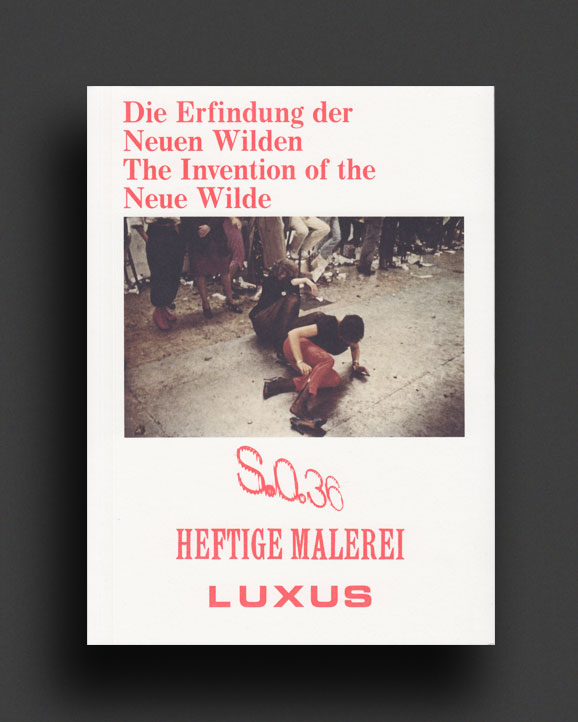
The Invention of the Neue Wilde aims to put a new perspective on the phenomena of the so-called ‘Neue Wilde’ (new Fauves), which was a term used in Germany for neo-expressionism: a movement which saw the re-emergence of expressive painting in the late 1970s and 1980s. Its most famous protagonists include Martin Kippenberger, Werner Büttner, Salome and Walter Dahn.
Instead of focusing on the production of paintings by those involved – and a corresponding catalogue of these paintings – it is much more interested in the emergence of the painting boom out of potent interplay between artists, gallerists, collectors and art historians. Here the focus is especially on personal backgrounds and the context in which painters worked.
The argument shows that the artistic practices of the ‘Neuen Wilden’ had little to do with a generalised ‘return’ to panel painting and thus to a traditional concept of art. Painting was in fact embedded in an extended network of artistic production, which was particularly characterised by a destabilisation in the division between high and popular culture as well as by various media, genres and collaborative forms of praxis.
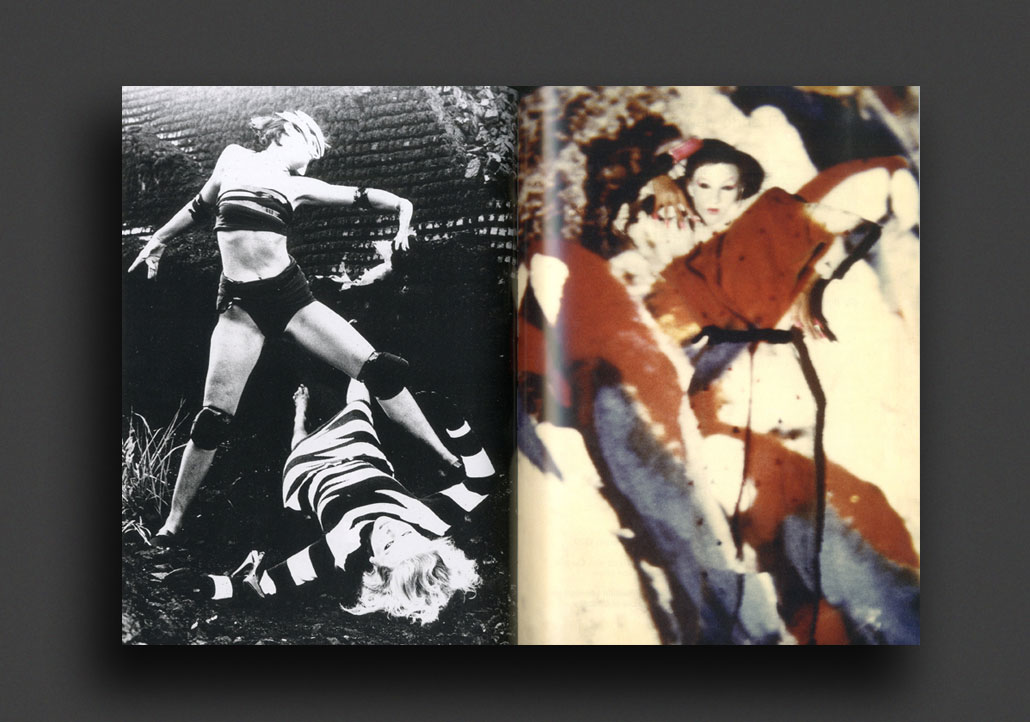
Hitherto neglected photographic and documentary material as well as artists’ posters, records, newspapers, video works and artists’ books testify to the artists’ experimental bent on one hand, their proximity to self-organised, subcultural phenomenon, such as the punk or new wave scenes of the 1980s on the other. On this basis, the much-described ‘return’ to painting can be exposed as a hugely simplified narrative, while sketching out a complex image of the situation around 1980.
Artists: Hans Peter Adamski, Peter Bömmels, Werner Büttner, Luciano Castelli, Walter Dahn, Jiÿí Georg Dokoupil, Rainer Fetting, G. L. Gabriel-Thieler, Anne Jud, Martin Kippenberger, Helmut Middendorf, Christa Näher, Hilka Nordhausen, Markus Oehlen, Brigitta Rohrbach, Salomé, Bettina Semmer, Bettina Sefkow, Claudia Skoda, Rolf von Bergmann, Bernd Zimmer, and others.
Includes texts by Thomas Bayrle, Andreas Beitin, Werner Büttner, Diedrich Diederichsen, Catherine Dossin, Brigitte Franzen, Ramona Heinlein, Christian Höller, Katrin Köpper
Published on the occasion of the exhibition, The Invention of the Neue Wilde: Painting and Subculture around 1980 at Ludwig Forum für Internationale Kunst, Aachen (12 October 2018 –10 March 2019).
English and German text.
2013, Japanese
Softcover, 212 pages, 28.2 x 21 cm
1st Edition, Out of print title / used / very good
Published by
Amana / Japan
$150.00 - In stock -
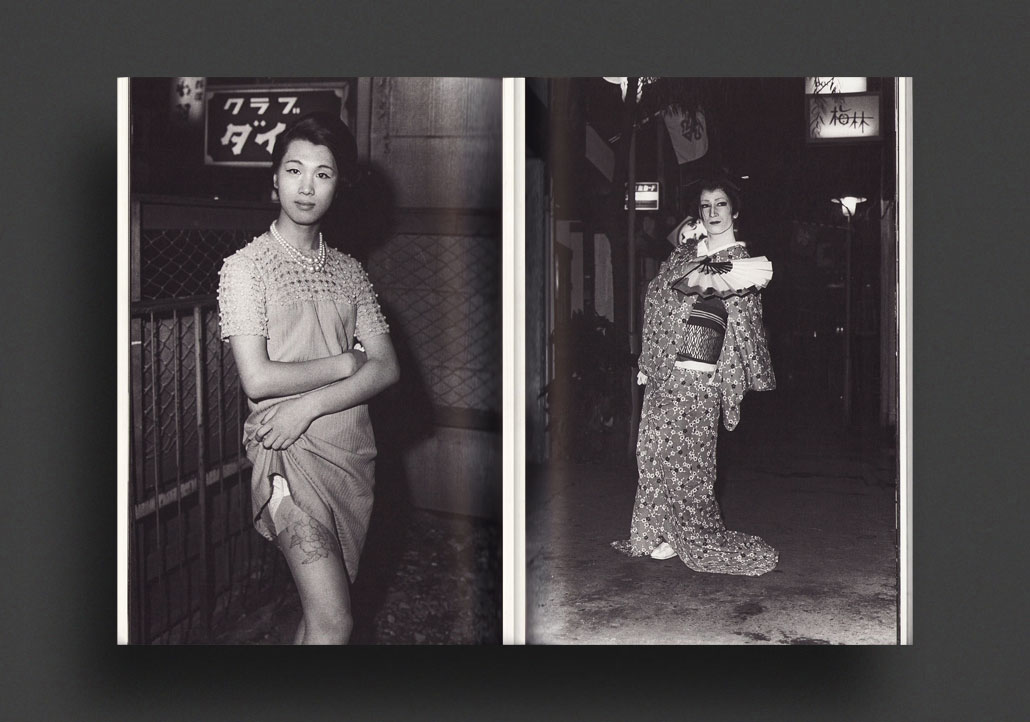
First edition of this wonderful collection of Japanese photographers that captured 1970s Tokyo, now out-of-print. In the world of fine art photography, post-war Japanese photography is continuing to gather attention. Many Japanese photographers were active specifically during the large cultural and political development of the 70s as the country experienced rapid economic growth. At the time, new styles of expression with a strong focus on the individual viewpoint were beginning to develop, which were distinct to the social documentary photography prior to that. This also coincided with the development of photography within the fashion and advertising field, reflecting a period where the works of many unique photographers and styles began to grow. A careful selection of 160 bodies of works by 9 prominent photographers of the time, each individually portraying the excitement and rapid growth which symbolised the era. Taiji Arita, Eikoh Hosie, Daido Moriyama, Masatoshi Naito, Hajime Sawatari, Issei Suda, Yoshihiro Tatsuki, Shuji Terayama, Katsumi Watanabe.
Very Good copy with good dust jacket.