World Food Books' programme is largely produced on Kulin Nation land. We acknowledge the Wurundjeri people of the Kulin Nation as the first and continuing custodians of this land, and pay respect to their Elders past, present, and emerging.
World Food Books is an arts and special interests bookshop in Naarm / Melbourne. Founded in 2010, World Food Books is devoted to the presentation of a rotating, hand-selection of international art, design, literary and counterculture publications with an emphasis on the anti-traditional, the experimental, the avant-garde, the heretic, the marginal.
Presenting new titles alongside rare and out-of-print books, catalogues and journals spanning the fields of modern and contemporary art, design, photography, illustration, film, literature, poetry, cultural theory, philosophy, sexuality, popular and underground culture in its many radical forms, World Food Books wishes to encourage adventurous, thoughtful and open-minded reading, looking, writing, and exchange of publishing and ideas, both current and historical.
As well as our bookshop, located in Melbourne's historical Nicholas Building, all of our inventory is available internationally via our online mail-order service.
World Food Books semi-regularly co-ordinates "Occasions", a programme of exhibits and events at the bookshop and in partnership with other hosts (such as museums and art galleries) that develop out of the activities, relationships and content of the bookshop itself.
World Food Books
The Nicholas Building
37 Swanston Street
Room 5, Level 6
Melbourne 3000
Australia
SHOP HOURS:
Thu–Fri 12–6, Sat 12–5
WEB-SHOP OPEN 24/7
World Food Books
Postal Address:
PO Box 435
Flinders Lane
Victoria 8009
Australia
Art
Theory / Essay
Architecture / Interior
Graphic Design / Typography
Photography
Fashion
Eros
LGBTQ+
Fiction / Poetry
Weird / Speculative / Science Fiction / Horror
Transgressive / Visceral / Abject
Symbolism / Decadence / Fin de siècle
Film / Video
Painting
Sculpture / Installation
Performance / Dance / Theater
Drawing
Sound / Music
Curatorial
Group Shows / Collections
Periodicals
Out-of-print / Rare
Posters / Ephemera / Discs
Signed Books
World Food Books Gift Voucher
World Food Book Bag
Australian Art
Australian Fiction
Australian Science Fiction / Speculative Fiction
Australian Poetry
Australian Photography
Japanese Photography
Conceptual Art
Minimal Art
Dada
'Pataphysics / Oulipo
Fluxus
Concrete Poetry
Pop Art
Surrealism
Arte Povera
Arte Informale / Haute Pâte / Tachism
Nouveau Réalisme / Zero / Kinetic
Situationism / Lettrism
Collage / Mail Art / Xerox Art
Art Brut / Folk / Visionary / Fantastic
Illustration / Graphic Art / Bandes Dessinées
Furniture
Italian Radical Design / Postmodernism
Textiles
Ceramics / Glass
Counterculture
Protest / Revolt
Philosophy
Psychoanalysis
Anthropology
Anarchism
Socialism / Anarchism / Communism / Capitalism
Literary Theory / Semiotics / Language
Feminism / Women's Studies
Gender Studies / Sexuality
Anthropology
Fetishism / BDSM
Drugs / Psychedelia
Crime / Violence
Animal Rights / Veganism
Occult / Esoterica
Ecology / Earth / Alternative Living
Whole Earth / Crafts
All prices in AUD (Australian dollars)
Pick-Ups
Pick-up orders can be collected in our bookshop during opening hours after order date. Please collect any Pick-up orders within 2 weeks of ordering as we have limited storage space. Orders will be released back into stock if not collected within this time. No refunds can be made for pick-ups left un-collected. If you cannot make it in to the bookshop in this time-frame, please choose postage option.
Return Policy
All sales are final. We do accept returns (for refund or exchange) for items received in error. All our orders are packed with special care using heavy-duty padding and cardboard book-mailers or bubble mailers (for smaller books), using reinforcement where required. We cannot take responsibility for any lost, stolen or damaged parcels.
Insurance
Should you wish to insure your package, please email us directly after placing your order and we can organise this at a small extra expense. Although all standard/express tracked packages are very safe and dependable, we cannot take responsibility for any lost, stolen or damaged parcels. We recommend insurance on valuable orders.
Interested in selling your old books, catalogues, journals, magazines, comics, fanzines, ephemera? We are always looking for interesting, unusual and out-of-print books to buy. We only buy books in our fields of interest and specialty, and that we feel we can resell.
We base these prices on desirability, market value, in-print prices, condition and our current stock levels. We offer cash, store credit, and can take stock on consignment. All
about 25% of the price we expect to get when we sell them, or 30% in store credit. We base these prices on desirability, market value, in-print prices, condition and our current stock levels.
Sell your books any day of the week. You can drop them off and return later. If you have a lot of books, we can visit your Sydney home.
We buy books that we feel we can resell. We offer about 25 % of the price we expect to get when we sell them, or 30% in store credit. We base these prices on desirability, market value, in-print prices, condition and our current stock levels.
Philadelphia Wireman
03 August - 01 September, 2018
World Food Books is proud to announce our next Occasion, the first presentation of sculptures by Philadelphia Wireman in Australia.
The Philadelphia Wireman sculptures were found abandoned in an alley off Philadelphia’s South Street on trash night in 1982. Their discovery in a rapidly-changing neighbourhood undergoing extensive renovation, compounded with the failure of all attempts to locate the artist, suggests that the works may have been discarded after the maker’s death. Dubbed the "Philadelphia Wireman" during the first exhibition of this work, in 1985, the maker’s name, age, ethnicity, and even gender remain uncertain. The entire collection totals approximately 1200 pieces, all intricately bound together with tightly-wound heavy-gauge wire (along with a few small, abstract marker drawings, reminiscent both of Mark Tobey and J.B. Murry). The dense construction of the work, despite a modest range of scale and materials, is singularly obsessive and disciplined in design: a wire armature or exoskeleton firmly binds a bricolage of found objects including plastic, glass, food packaging, umbrella parts, tape, rubber, batteries, pens, leather, reflectors, nuts and bolts, nails, foil, coins, toys, watches, eyeglasses, tools, and jewellery.
Heavy with associations—anthropomorphic, zoomorphic, and socio-cultural responses to wrapped detritus—the totemic sculptures by Philadelphia Wireman have been discussed in the context of work created to fulfil the shamanistic needs of alternative religions in American culture. Curators, collectors, and critics have variously compared certain pieces to sculpture from Classical antiquity, Native American medicine bundles, African-American memory jugs, and African fetish objects. Reflecting the artist’s prolific and incredibly focused scavenging impulse, and despite—or perhaps enhanced by—their anonymity, these enigmatic objects function as urban artefacts and arbiters of power, though their origin and purpose is unknown. Philadelphia Wireman, whatever their identity, possessed an astonishing ability to isolate and communicate the concepts of power and energy through the selection and transformation of ordinary materials. Over the course of the past two decades, this collection has come to be regarded as an important discovery in the field of self-taught art and vernacular art.
Presented in collaboration with Fleisher-Ollman Gallery, Philadelphia, and Robert Heald, Wellington.
Susan Te Kahurangi King
02 February - 10 March, 2018
Susan Te Kahurangi King (24 February 1951 - ) has been a confident and prolific artist since she was a young child, drawing with readily available materials - pencils, ballpoint pens and felt-tip markers, on whatever paper is at hand. Between the ages of four and six Susan slowly ceased verbal communication. Her grandparents William and Myrtle Murphy had developed a special bond with Susan so they took on caring responsibilities for extended periods. Myrtle began informally archiving her work, carefully collecting and storing the drawings and compiling scrapbooks. No drawing was insignificant; every scrap of paper was kept. The King family are now the custodians of a vast collection containing over 7000 individual works, from tiny scraps of paper through to 5 meter long rolls.
The scrapbooks and diaries reveal Myrtle to be a woman of great patience and compassion, seeking to understand a child who was not always behaving as expected. She encouraged Susan to be observant, to explore her environment and absorb all the sights and sounds. Myrtle would show Susan’s drawings to friends and people in her community that she had dealings with, such as shopkeepers and postal workers, but this was not simply a case of a grandmother’s bias. She recognised that Susan had developed a sophisticated and unique visual language and sincerely believed that her art deserved serious attention.
This was an unorthodox attitude for the time. To provide some context, Jean Dubuffet coined the term Art Brut in 1945 to describe work created by self-taught artists – specifically residents of psychiatric institutions and those he considered to be visionaries or eccentrics. In 1972 Roger Cardinal extended this concept by adopting the term Outsider Art to describe work made by non-academically trained artists operating outside of mainstream art networks through choice or circumstance. Susan was born in Te Aroha, New Zealand in 1951, far from the artistic hubs of Paris and London that Dubuffet and Cardinal operated in. That Myrtle fêted Susan as a self-taught artist who deserved to be taken seriously shows how progressive her attitudes were.
Susan’s parents Doug and Dawn were also progressive. Over the years they had consulted numerous health practitioners about Susan’s condition, as the medical establishment could not provide an explanation as to why she had lapsed into silence. Dawn educated herself in the field of homeopathy and went on to treat all twelve of her children using these principles – basing prescriptions on her observations of their physical, mental and emotional state.
Doug was a linguist with an interest in philosophy who devoted what little spare time he had to studying Maori language and culture. To some extent their willingness to explore the fringes of the mainstream made them outsiders too but it was their commitment to living with integrity and their respect for individuality that ensured Susan’s creativity was always encouraged.
Even though Susan’s family supported her artistic pursuits, some staff in schools and hospitals saw it as an impediment to her assimilation into the community and discouraged it in a variety of ways. Her family was not always aware of this and therefore did not fully understand why Susan stopped drawing in the early 1990s. However, rather than dwell on the challenges that Susan faced in pursuit of her artistic practice, they prefer to highlight her achievements. In 2008 Susan began drawing again in earnest, after an almost 20 year interruption, and her work is now shown in galleries around the world.
Susan grew up without television and has been heavily influenced by the comics she read as a child. She is absolutely fearless in the appropriation of recognizable characters, such as Donald Duck and Mickey Mouse, in her work. She twists their limbs, contorts their faces, compresses them together, blends them into complex patterned backgrounds - always imbuing them with an incredible energy. Although Susan often used pop culture characters in her work they are not naive or childlike. These are drawings by a brilliant self-taught artist who has been creating exceptional work for decades without an audience in mind.
Mladen Stilinović
"Various Works 1986 - 1999"
02 February 16 - September 10, 2016
Various works 1986 - 1999, from two houses, from the collections of John Nixon, Sue Cramer, Kerrie Poliness, Peter Haffenden and Phoebe Haffenden.
Including: Geometry of Cakes (various shelves), 1993; Poor People’s Law (black and white plate), 1993; White Absence (glasses, ruler, set square, silver spoon, silver ladel with skin photograph and wooden cubes), 1990-1996; Exploitation of the Dead (grey and red star painting, wooden painting, black spoon with red table, red plate), 1984-1990; Money and Zeros (zero tie, paintings made for friends in Australia (Sue, John, Kerrie), numbers painting), 1991-1992; Words - Slogans (various t-shirts) - “they talk about the death of art...help! someone is trying to kill me”, “my sweet little lamb”, “work is a disease - Karl Marx”; Various artist books, catalogues, monographs, videos; Poster from exhibition Insulting Anarchy; "Circular" Croatian - Australian edition; Artist book by Vlado Martek (Dostoyevsky); more.
Thanks to Mladen Stilinović and Branka Stipančić.
Jonathan Walker
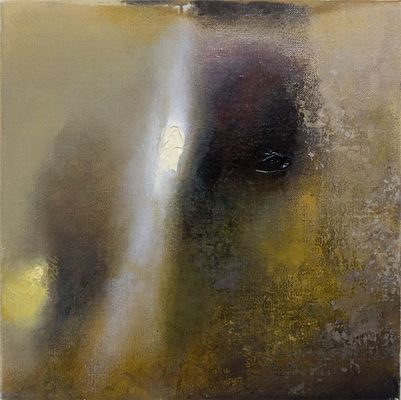
Always Will Need To Wear Winter Shirt Blue + Ochre Small Check Pattern
21 August - 21 September, 2015
Untitled
I am not a great reader of poetry but I always return to the work of Melbourne poet, Vincent Buckley (1925- 1988). Perhaps I find his most tantalising piece to be not a finished poem but a fragment left on a scrap of paper discovered on his desk after the poet’s death.
The poetry gathers like oil
In the word-core, and spreads
It has its music meet,
Its music is in movement.
This fragment is more the shell left behind from a volatile thought than a finished poem. I find the last two lines honest but awkward whereas the first two lines work like an arrow. Most likely he could not find a resolution so it was left. Still, in its present form, it remains an eloquent testimony to the ultimate failure of a medium to express mobile thought and sensation, in Buckley’s case, through verbal language. It’s an important matter because this is something all artists have to deal with regardless of the medium.
I have never written a poem, however, I am forever copying fragments from books on paper scraps in a vain effort to fix certain notions in my head. At first, they function as bookmarks that are sometimes returned to when I open the book. But before long, as they accumulate, they fall out littering the table interspersed with A4 photocopies, bills, books and medications.
To return to Buckley’s fragment, the first two lines very much evoke how I paint nowadays. As you age, detail diminishes and patches of light become more luminous and float. I feel the most honest way of dealing with this is by smearing the oil paint on the canvas with the fingers and working close-up, blind. Only if the patches coalesce into an approaching image can the work gain a life.
-
Jonathan Walker was born in Melbourne, Australia and brought up on a dairy farm in Gippsland. In the 1970’s he studied painting at RMIT and won the Harold Wright Scholarship to the British Museum, London. During the 1980’s he exhibited at Pinacotheca Gallery, Richmond and had work shown at the NGV and Heidi City Art Gallery. Over the same period he designed the cover for the “Epigenesi” LP by Giancarlo Toniutti, Italy and conducted a mail exchange work with Achim Wollscheid, Germany. The work with artists through the post resulted in an article published in the bicentenary issue of Art and Australia 1988. He showed in artist run spaces such as WestSpace in the 90’s and 2000’s, and until 2012, taught painting at Victoria University, which is where we (Colleen Ahern and Lisa Radford) as organisers of the exhibition, among many others, had the privilege of being his student.
Walker’s knowledge was imparted to students through the careful selection of music, literature, and artists found in books that he himself had ordered for the library. Walker’s strategy was the generosity of sharing his vast knowledge with references specific to each student and their context.
Walker’s paintings share a similar focus and intimacy.
This exhibition presents a small selection of recent paintings alongside a publication that includes Walker’s writing. Observational and analytical, Walker’s work is a type of material notation — the time of day, colour and how it is blended, the both specific and fleeting location of a reflection on lino or the question of whether a chair leg should be included in a painting.
Please join us on Friday August 21 between 6-8pm to celebrate the opening of the exhibition.
Curated by Colleen Ahern and Lisa Radford.
B. Wurtz
Curated by Nic Tammens
March 26 - April 4, 2015
B.Wurtz works from a basement studio in his home on Manhattan’s Lower East Side.
This local fact is attested to by the plastic shopping bags and newsprint circulars that appear in his work. As formal objects, they don’t make loud claims about their origins but nonetheless transmit street addresses and places of business from the bottom of this long thin island. Like plenty of artists, Wurtz is affected by what is local and what is consumed. His work is underpinned by this ethic. It often speaks from a neighborhood or reads like the contents of a hamper:
“BLACK PLUMS $1.29 lb.”
“Food Bazaar”
“USDA Whole Pork Shoulder Picnic 99c lb.”
“RITE AID Pharmacy, with us it’s personal.”
“H. Brickman & Sons.”
“Sweet Yams 59c lb."
Most of the work in this exhibition was made while the artist was in residence at Dieu Donne, a workshop dedicated to paper craft in Midtown. Here Wurtz fabricated assemblages with paper and objects that are relatively lightweight, with the intention that they would be easily transportable to Australia. This consideration isn’t absolute in Wurtz’s work, but was prescriptive for making the current exhibition light and cheap. Packed in two boxes, these works were sent from a USPS post office on the Lower East Side and delivered to North Melbourne by Australia Post.
Wurtz appears courtesy of Metro Pictures, New York.
Thanks to Rob Halverson, Joshua Petherick, Sari de Mallory, Matt Hinkley, Helen Johnson, Fayen d'Evie, Ask Kilmartin, Lisa Radon, Ellena Savage, Yale Union, and "Elizabeth".
John Nixon
"Archive"
December 15 - January 20, 2014
The presentation of John Nixon's archive offered a rare showcase of this extensive collection of the artist's own publications, catalogues, posters, ephemera, editions and more, from the mid 1980s onwards, alongside a selection of his artworks.
Organized by John Nixon, Joshua Petherick and Matt Hinkley.
<a href=http://wfb.public-office.info/artist/john-nixon>All titles by John Nixon
"Habitat"
at Minerva, Sydney (organised by Joshua Petherick and Matt Hinkley)
November 15 - December 20, 2014
Lupo Borgonovo, Janet Burchill & Jennifer McCamley,
Lewis Fidock, HR Giger, Piero Gilardi, Veit Laurent Kurz,
Cinzia Ruggeri, Michael E. Smith, Lucie Stahl, Daniel Weil, Wols
Press Release:
“...It contained seven objects. The slender fluted bone, surely formed for flight, surely from the wing of some large bird. Three archaic circuitboards, faced with mazes of gold. A smooth white sphere of baked clay. An age-blackened fragment of lace. A fingerlength segment of what she assumed was bone from a human wrist, grayish white, inset smoothly with the silicon shaft of a small instrument that must once have ridden flush with the surface of the skin - but the thing’s face was seared and blackened.”
William Gibson, “Count Zero”, 1986
"Autumn Projects Archive"
Curated by Liza Vasiliou
March 6 - March 15, 2014
World Food Books, in conjunction with the Virgin Australia Melbourne Fashion Festival 2014, presented the Autumn Projects archive, consisting of a selection of early examples in Australian fashion with a particular interest in collecting designers and labels from the period beginning in the 1980’s, who significantly influenced the discourse of Australian Fashion.
Curated by Liza Vasiliou, the exhibition provided a unique opportunity to view pieces by designers Anthea Crawford, Barbara Vandenberg, Geoff Liddell and labels CR Australia, Covers, Jag along with early experimental collage pieces by Prue Acton and Sally Browne’s ‘Fragments’ collection, suspended throughout the functioning World Food Books shop in Melbourne.
H.B. Peace
presented by CENTRE FOR STYLE
November 14, 2013
"Hey Blinky, you say chic, I say same"
Anon 2013
H.B. Peace is a clothing collaboration between great friends Blake Barns and Hugh Egan Westland. Their pieces explore the divergences between 'character’ and ‘personality’ in garments....etc
Special Thanks to Joshua Petherick and Matt Hinkley of WFB and Gillian Mears
and a Very Special Thank you to Audrey Thomas Hayes for her shoe collaboration.
Janet Burchill & Jennifer McCamley
"Aesthetic Suicide"
May 10 - June 8, 2013
The first of our occasional exhibitions in the World Food Books office/shop space in Melbourne, "Aesthetic Suicide" presented a body of new and older works together by artists Janet Burchill & Jennifer McCamley, including videos, prints, a wall work, and publications.
During shop open hours videos played every hour, on the hour.
1980, French
Hardcover cloth-bound slipcase, 13 plates + text insert, 42.2 x 30.9 cm
Signed and numbered,
1st Edition, Out of print title / used / very good
Published by
Galerie Bijan Aalam / Paris
Editions Natiris / Paris
$550.00 - In stock -
"An artist with a secret, terrible and painful gaze, Ruppert's work boldly plunges us into the darkest abysses of our souls, to the depths of our unconfessed sexuality, into these cursed areas that we refuse with a self-protective horror instilled by the taboos of society."
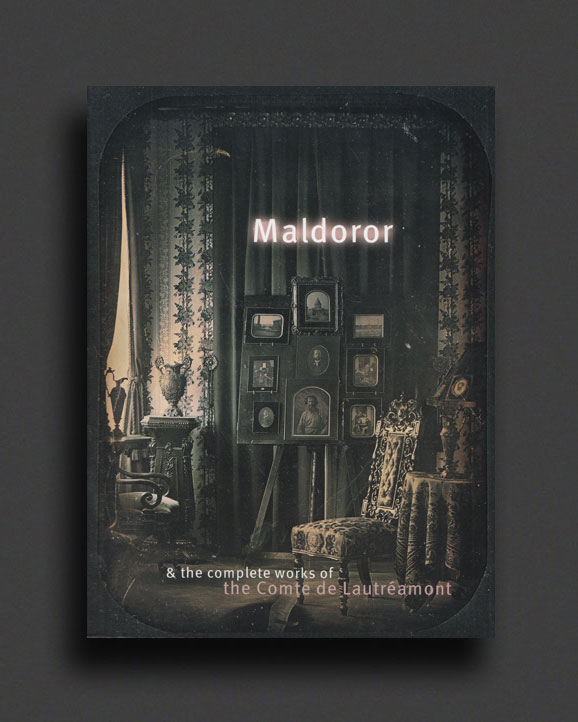
Extremely rare, signed and numbered cloth-bound portfolio by German artist Sibylle Ruppert (1942—2011), published in 1980 by Galerie Bijan Aalam / Editions Natiris, Paris, published in an edition of 1300. With a preface by Alain Robbe-Grillet, this magnificent portfolio illustrating Lautréamont's Les Chants de Maldoror (1868) presents 13 litho-printed loose-leaf plates in colour and monochrome, exquisitely reproducing Ruppert's artworks in striking large-format. The leading plate folds-out to a double-size spread. Accompanied by a selection of passages by Comte de Lautréamont (Isidore Lucien Ducasse) to whom this title is dedicated and from which these illustrations are inspired. Numbered and signed by the artist in the colophon. A complete copy of this major published work of this incredible artist.
"The opening pages of Georges Bataille’s 1928 novella, Story of the Eye, recount a violent three-way sex scene on the edge of a cliff. As the libidinal frenzy nears its peak, rain starts to fall, introducing mud and dirt into the already visceral cocktail of piss, cum, and other bodily fluids in free flow. If this literary vignette had a visual equivalent, it might well be the Sisyphean compositions of Sibylle Ruppert, in which hybrid limbs, flesh, machinery, and the natural elements all commingle and fuse into one another without beginning or end, obliterating any notion of bodily integrity. Bataille, the Marquis de Sade, and Comte de Lautréamont make up the unholy trinity who nourished Ruppert’s dark fantasies. The violent explosiveness of eroticism, desire, pain, destruction, and resurgence so dear to those authors is channeled in Ruppert's works"—Anya Harrison
Sibylle Ruppert (1942, Frankfurt—2011, Paris) created a radical oeuvre of paintings, drawings and collages throughout the 1960s—1980s in a brutal aesthetic of dark surrealism, mixing death and sexuality in a swirling dislocation, a frenetic tearing shared by aggregates of tangled bodies such as the morbid and obscene writings of Marquis de Sade, Comte de Lautréamont, both which she illustrated, or that of Georges Bataille. Ruppert was born during an air raid on September 8th, 1942, the first night of massive bombing of Frankfurt during World War II. At age of 10 she had a religious enlightenment and she insisted on becoming a nun. Discouraged by her parents, in 1959, at the age of 17, Sibylle was instead admitted to the Städelschule in Frankfurt to study art. Shortly after, she left for Paris, where she enrolled in a ballet school and became a successful dancer. During a visit to New York with her friend H.R. Giger, Ruppert decided to give up her dancing career, returned to Germany and became a full-time artist and to teach at her father's drawing school. In 1976 she moved back to Paris and exhibited her large format charcoal drawings, inspired by the writings of de Sade, Lautréamont and Georges Bataille, and her collages and paintings at the Gallery Bijan Aalam. French intellectuals and great minds like Alain Robbe-Grillet, Pierre Restany, Henri Michaux and Gert Schiff were fascinated by her work and tried to interpret her infernal world. When the gallery closed in 1982, she returned to teaching and she started giving art classes in prisons, mental hospitals and drug addiction rehabilitation centers. Sibylle Ruppert died in 2011, withdrawn from any social and public life.
"Here offered to the revulsed senses, the secret shames of anatomy: torn orifices, spilled entrails, secretions, losses. A sharp point, I said. Yes, the sticky and the sharp seem, now, to generate each other in a circle, the fine knife of torture to belong to the same monster as the ignominious flesh which is cut (unbunched), the sexes are invert, insidiously, and invaginate the murder weapon[...]"—A. Robbe-Grillet
Very Good copy with some light wear, light marking and tanning. Sample images only.
2015, English
Hardcover (w. dust jacket), 628 pages, 20.5 x 13 cm
Published by
Tracy R. Twyman / US
$110.00 - In stock -
For seven centuries, the enigma of Baphomet has mystified both scholars and the general public. Did the Knights Templar really worship a demonic idol of that name? If so, what does the word mean? What is the origin of this figure? What was the nature of the rituals that the Templars performed in secret? What were their covert beliefs? Why, if the Templars initially described their idol as a mummified severed head, is this figure now represented as a hermaphrodite human with the head of a goat?
Authors Tracy R. Twyman and Alexander Rivera have dived head-first into the bottomless abyss of this mystery and returned with some astounding wisdom to share. Here for the first time they reveal the genesis of these symbols, showing how they relate to the Witches' Sabbath, traditions of Sufi Islam, alchemy, Gnosticism, cabalism, the teachings of Hermes Trismegistus, and so much more.
Learn why the Templars and their beloved severed head are frequently associated with John the Baptist, and how this connects to his student, Simon Magus. Discover the real facts about things like the Chinon Parchment, The Book of the Baptism of Fire, the Templar Abraxas seals, and newly-found documents which claim that the Templars discovered the real Temple of Solomon during a secret trip to Mecca.
Join Twyman and Rivera on this exciting adventure into the unknown. Immerse yourself in this knowledge, if your heart has the strength. It is certain that your mind will never be the same.
1978 / 1979, English
Softcover, 78 pages (w. fold-outs), 42 x 30 cm
1st Edition, Out of print title / used / good
Published by
Big O Publishing / London
$450.00 - In stock -
Rare first 1978 English-language edition of Giger's Necronomicon, published by Big O. Designed by the artist himself with an introduction by Clive Baker and numerous texts by Giger, as well as texts by Fritz Billeter and Simon Vinkenoog and a tribute from Salvador Dali. Second 1979 printing.
"The "Necronomicon" is a legendary magical book that is kept in inaccessible places only in a few, incompletely preserved specimens because it could have disastrous consequences if it fell into the wrong hands. It was written down around 730 AD in Yemen by the legendary Abdul Al Azred. It is said to tell of things and events that took place in the gray age, and illustrations of uncanny creatures lurking in the depths of the earth and the seas, one day destroying mankind and striking the world.
Al Azred's "Necronomicon" is a kind of museum of the most wonderful abominations and perversions. The well-known writer HP Lovecraft was the first to report in his "Cthulhu" mythology of this work. Many other science fiction and fantasy writers have quoted this fictional work time and again, but it has only become a visual reality in "HR Giger's Necronomicon"!"
"Giger always opens up new approaches to the origins of our psyche," writes Clive Baker in his foreword. "He is planning for us to go, encouraged by the knowledge that others have gone before this path, and only a few artists are able to give such impulses, and if we follow Giger, we are initially afraid of our mental health. And quickly recognize that the supposed new territory has countless stations that are connected with our familiar life. For, after all, we are no strangers: Giger points the direction into the world in which we must return, where we pledge our pledge, to pay the tithes which we owe. Giger's world is the place of our own taboos, and only our own disregard makes him appear frightening, sullen, "alien" (alien). (...) Giger's work calls us to the common ground of the unconscious, where, though we sometimes alienate ourselves from it, we are never really strangers. In other words, HR Giger's fantastic art is calling us home."
Beginning with a hommage from Salvador Dali, the first in this series of oversized and visually overwhelming volumes takes us through the early history of one of the most brilliant fantasy artists of the century. From his "Passegen" series, his work for theatre, posters, album artwork, environments, personal works, is designs for Alejandro Jodorowsky's DUNE, and much more, all beautifully reproduced in full-colour and black and white, full-bleed spreads, including fold-out pages. These Giger folio books have become very desirable, collectable editions in their various printings around the world, the series encompassing the work of one of the world's most unique and influential visionaries.
Good copy with bump to top-right corner, light wear to extremities.
2021, English
Softcover, 106 pages, 20.4 x 12.7 cm
Published by
Schism Press / World
$24.00 - In stock -
It is enough to glance at the footnotes - from masters of body horror like Cronenberg, Ballard and Barker to post-structuralist philosophers of the self like Derrida, Nancy and Deleuze - to grasp the intention of Snuff Memories. Unveiling like a tableau of ancient gods and deathly orgies, where “the universe is composed out of windowless monads each locked away and screaming,” this evocative novel is better called a theoretical installation. Each fragment documenting an erotic way to lose one’s humanity, this is a collection of nightmarish yet utopian miniature visions of sex, death, transformation, and pain, where human bodies are stretched beyond their capacity into mythical realms. Brutal and evocative, at once a prose poem and a theory of the limit, Snuff Memories creates a mythology of enticing and deadly encounters with mutants, matriarchs, and goddesses, documenting a multitude of ways in which one can be erotically and philosophically disemboweled.
– Bogna M. Konior, Research Fellow, NYU Shanghai, Interactive Media Arts department & AI and Culture Research Centre
Snuff Memories is Sadean. Not because of its commitment to detailing the minutiae of posthuman pornographic excess (although that is certainly an important part of the work) but because of its obsession with permutation. Everything is erected, demolished, decentred, and respooled, before being forced out to the limits once again. Bodies effervesce in fatal conjugations, topologies deform, fuzz out and remerge everted, like bad DOOM skins, covered in blood. The posthuman cannot be known before it is produced—so to know it, we must produce it. And until we really are swept up in these disorienting forces—merciless, murderous, erotic perhaps—we have literature. Snuff Memories is a book for anyone who ever secretly wanted to get dommed by fiction.
– Amy Ireland
Read less
2024, English
Softcover, 256 pages, 21.5 x 14 cm
Published by
Ↄalamari / Earth
$55.00 - In stock -
2024 redux edition of the long out-of-print 2002 cyberpunk cult classic
"A Finnegans Wake for the postdigital millennium, Kenji Siratori’s Blood Electric is probably the foundational text of the language-horror sub-genre: an evasive, esoteric and ultraexperimental writing style produced by the convergence of poetics and methods borrowed from avantgarde literature, electronic/noise music, synthetic abstract image generation, and severe—yet delicate—syntactic deconstruction. Siratori’s unique writing technique results in a hardcore-cyberpunk material account of a bio-techno singularity network in which flesh-code wetware and silicon-thriving software infold together into wave-multitudes of text-organisms. While most contemporary authors exploring the possibility of the blending of humans and machines focus on the extrapolation of logical and transcendental interactions (as in classical cyberpunk, from which Blood Electric initiates a radical breakup), Siratori’s language emanates directly from the contingent, rhizomatic, non-teleological, reciprocal disruption of several unstable and immanent modes of embodied (in)existence. In Blood Electric the text becomes an incantation demanding full abandonment, generating its own unpredictable rhythms as it enraptures you beyond reading, beyond yourself, like when participating in a rave."—Germán Sierra
"… Blood Electric is unreadable in anything other than short, migraine-inducing bursts."—The Guardian
"Following the publication of Kenji Siratori's Blood Electric, the Japanese cyberpunk writer perhaps pioneered a movement among all non-English speaking writers whose languages are radically dissociated from the dominant Latin-Anglo-Franco-German linguistic germ-line on the one hand, and are, on the other, enthusiastically seeking to contribute to the diversification of the English language whose centrality has already been sabotaged in the wake of emerging cyber-societies."—Reza Negarestani, in 3:AM Magazine
"Kenji is making rather more sense than usual. Perhaps the lad is finally coming into his own as the literary avatar of our times."—Bruce Sterling
"Kenji is a madman for sure, but if you scan his hallucinatory textual mashups in just the right frame of mind, they begin to make sense. And that's the scary part."—Douglas Rushkoff
"Contemporary Japan is exploding in slow-motion, and Kenji Siratori arranges the blood- and semen-encrusted deris with the finesse of a berserk Issey Miyake. Rendering English-language cyberpunk instantly redundant with his relenteless, murderous prose-drive, Siratori transmits his authentic, category-A hallucinogenic product direct to this reader’s cerebellum. A virulently warped amalgam of Tetsuo and cut-up era William Burroughs."—Stephen Barber (author of Tokyo Vertigo)
"Blood Electric is the black reverb of soft machine seppuku, a molten unspooling of sheet metal entrails and crucified memory banks into the howling void of violence. It is a cyborg crash nightmare of the new flesh, a final dispatch from mutant Hell where the embryo hunts in secret."—Jack Hunter (author of Eros in Hell)
"Siratori’s hypermodern project articulates the nonarticulation that currently dominates the substratum of much current discourse. Without the intense atomization of the individual, Siratori’s work does not resound. Yet, if we take pause, Siratori’s work resonates at a fever pitch, blaring at the limitless informational realm of our minds as it bursts the parameters of the skull. As a kind of accelerationist aesthetic, Siratori critiques technology by pushing it beyond its sensible potentiality; he cultivates alien cognitions where alternatives thrive, where semantic derangement is revolt, where epistemology uncoils. Ultimately, he uncompromisingly forces us to pause on the chaos of the glitch, to claim the instance where embodying the unquantifiable amounts to insurgency."—Andrew C. Wenaus, Author of The Literature of Exclusion: Dada, Data, and the Threshold of Electronic Literature
2017, English
Softcover, 300 pages, 12.8 x 19.8 cm
Published by
Repeater Books / London
$30.00 - Out of stock
What exactly are the Weird and the Eerie? In this new essay, Mark Fisher argues that some of the most haunting and anomalous fiction of the 20th century belongs to these two modes. The Weird and the Eerie are closely related but distinct modes, each possessing its own distinct properties. Both have often been associated with Horror, yet this emphasis overlooks the aching fascination that such texts can exercise. The Weird and the Eerie both fundamentally concern the outside and the unknown, which are not intrinsically horrifying, even if they are always unsettling. Perhaps a proper understanding of the human condition requires examination of liminal concepts such as the weird and the eerie. These two modes will be analysed with reference to the work of authors such as H. P. Lovecraft, H. G. Wells, M.R. James, Christopher Priest, Joan Lindsay, Nigel Kneale, Daphne Du Maurier, Alan Garner and Margaret Atwood, and films by Stanley Kubrick, Jonathan Glazer and Christoper Nolan."
2025, English
Softcover, 130 pages, 20.3 x 17.8 cm
Published by
The New York Review of Books / New York
$34.00 - In stock -
Ancient Mesopotamia, the Zodiac, and the land of the dead feature in this wildly surrealistic adventure story—Leonora Carrington's revolutionary second novel, long out of print.
The Stone Door is an omen, an incantation, and an adventure story rolled into one. Built in layers like a puzzle box, it is the tale of two people, of love and the Zodiac and the Kabbalah, of Transylvania and Mesopotamia converging at the Caucasus, of a mad Hungarian King named Böles Kilary and of a woman's discovery of an initiatory code that leads to a Cyclopean obstacle, to love, self and awareness, to the great stone door of Kescke and beyond.
Written at the end of World War II but not published until 1977 and long unavailable, The Stone Door is at once a celebration of the union of the surrealist painter Leonora Carrington and her husband, the Hungarian-born photographer Chiki Weisz, and an argument for the unification of the male and the female as a means of liberating the human race.
1983, English
Hardcover (w. dust jacket), 380 pages (approx), 36 x 24 cm
1st Edition, Out of print title / used / very good
Published by
Abbeville Press / New York
$650.00 - In stock -
Very rare copy of the first 1983 Abbeville English hardcover edition of the ever mysterious Codex Seraphinianus by Italian artist and designer Luigi Serafini (1949—), a book like no-other. Ever since the Codex Seraphinianus was first published in Italy in limited edition by Franco Maria Ricci in 1981, the book has been recognized as one of the strangest and most beautiful art books ever made. This phantasmagorical visual encyclopedia of an unknown world written in an unknown language has fueled much debate over its meaning. Written for the information age and addressing the import of coding and decoding in genetics, literary criticism, and computer science, the Codex confused, fascinated, and enchanted a generation, including Roland Barthes and Italo Calvino. While its message may be unclear, its appeal is obvious: it is a most exquisite artifact. Blurring the distinction between art book and art object.
Very Good book in Very Good dust jacket with a couple of straches to edges and light wear, preserved in mylar wrap. Light wear to block edge on a few pages.
2026, English
Softcover, 92 pages, 19.8 x 12.9 cm
Published by
Silver Press / London
$27.00 - In stock -
Legendary author Ursula K. Le Guin was lauded by millions for her groundbreaking science fiction novels, but she began as a poet. In this clarifying and sublime collection – completed shortly before her death in 2018 – Le Guin is unflinching in the face of mortality, and full of wonder for the mysteries beyond. Redolent of the lush natural beauty of the Pacific Northwest, with rich sounds playfully echoing myth and nursery rhyme, Le Guin bookends a long, and prolific career.
Ursula K. Le Guin began writing poetry before writing across many genres for her whole life. This elegiac collection of poems, completed shortly before her death in 2018, reflects on the soul, mortality and the mysteries beyond. 'So Far So Good' walks between the knowable and the unknown with characteristic insight and courage.
2026, English
Softcover, 258 pages, 19 x 12 cm
Published by
Index Press / Melbourne
$40.00 - In stock -
Described as “the most important British philosopher” of our time, Nick Land is an enigmatic figure shrouded in controversy, rumour, and myth. Too heretical for the academic establishment, Land has had a meteoric impact on contemporary philosophy, politics, and culture. His striking insights and singular prose have left their mark on leading philosophers such as Mark Fisher and Ray Brassier, inspired artists like Kode9 and Jake and Dinos Chapman, and even shaped the mindset of Silicon Valley kingmakers like Marc Andreessen. His prophetic thought has helped give rise to major philosophical and cultural movements, from speculative realism and cyberfeminism to accelerationism and neoreaction.
Unknown Lands is the essential introduction to Land’s radical and often cryptic philosophy, providing a comprehensive decoding of his labyrinthine writings. The book takes us through his earliest inventive readings of Schopenhauer, Nietzsche, Freud, and Bataille, which he wields to critique the likes of Kant, Heidegger, and Derrida for repressing the brute fact of our mortality. It goes right up to his seminal remixing of Deleuze and Guattari, cybernetics, and cyberpunk in his account of capitalism’s race towards human extinction at the advent of the technological singularity.
Making sense of ideas that have long circulated in cult obscurity, Unknown Lands presents perhaps the most apocalyptically nihilistic and yet powerfully ecstatic vision of the world. It is unlikely to leave readers’ preconceptions—or sanity—fully intact.
“Few people can write about Nick Land in a way that doesn’t betray the principles of Land’s own thought. Vincent Lê is one of them. Unknown Lands refuses the sterility, distance, and moral condescension of academic writing on Land while maintaining a depth of philosophical engagement that is depressingly absent in the thriving industry of online commentaries.”—Amy Ireland, co-author of Cute Accelerationism and The Xenofeminist Manifesto
“A superbly lucid, philosophically grounded study that will be of value to both students and advanced researchers, presenting Nick Land as among the most rigorous and relentlessly corrosive thinkers of the posthuman. When other continental thinkers imagined they were challenging ‘humanism’ with their anthropotechnics and all-too-human cyborgs, Vincent Lê shows that Land was the one who first called it for the radically inhuman trajectory of our technological condition.”—David Roden, author of Posthuman Life, Xenoerotics, and Snuff Memories
“Vincent Lê has pulled off the almost impossible. He has produced an unheretical account of the most ‘heretical’ philosopher since Nietzsche. What he says here—and what you will read—is calm, measured, and assured. It tells us where the Nick Land of today came from. If anyone is going to judge Land and speak either for or against him, they need to read this book first.”—Rex Butler, author of Deleuze and Guattari’s “What is Philosophy?”: A Reader’s Guide, Slavoj Žižek: Live Theory, and Jean Baudrillard: The Defence of the Real
Design by Alexandra Margetic
2023, English
Softcover, 72 pages, 17.8 x 11.4 cm
Published by
Wakefield Press / Cambridge
$29.00 - In stock -
Translated, with an introduction, by Justin Vicari.
Conceived in a hospital bed in 1917, then written a few months later after his first and fateful encounter with Lautréamont’s Maldoror, Philippe Soupault’s novella, The Voyage of Horace Pirouelle, preceded the author’s involvement with the Parisian Dada movement and the adventure of surrealism he would later launch with his friends. Inspired by a Liberian schoolmate’s sudden departure for Greenland on a whim and his subsequent disappearance into that distant country, Soupault imagines his alter ego’s adventures as entries in a journal both personal and fictional. Adopted by an Inuit tribe, Pirouelle drifts from one encounter to another, from one casual murder to another, until his life of liberty and spontaneity leads him to stasis at the edge of existence.
Floating between the romantic legacy of Arthur Rimbaud’s abandonment of literature and the banality and loss of personality and morality in the adventurer’s abandonment of society, The Voyage of Horace Pirouelle charts out a troubled tribute to wanderlust and the acte gratuit.
After taking an active part in French Dada, Philippe Soupault (1897–1990) cofounded the surrealist movement with André Breton and Louis Aragon, and authored with Breton The Magnetic Fields, the first official surrealist work. After being expelled from the movement for the crime of being “too literary,” he devoted his life to writing, travel, journalism, and political activity (for which he was put in prison by the collaborationist Vichy government).
2024, English
Softcover, 160 pages, 20.5 x 13.5 cm
Published by
Wakefield Press / Cambridge
$34.00 - In stock -
With the 2018 publication of Letters, Dreams, and Other Writings, Wakefield Press introduced the writings of Surrealist painter Remedios Varo into English for the first time. These texts, never published during her lifetime, presented something of a missing chapter, and offered the same qualities to be found in her visual work: an engagement with mysticism and magic, a breakdown of the border between the everyday and the marvelous, a love of mischief, and an ongoing meditation on the need for (and the trauma of) escape in all its forms.
This new, expanded volume brings together the painter’s collected writings, an unpublished interview, letters to friends and acquaintances (as well as to people unknown), dream accounts, notes for unrealized projects, a project for a theater piece, whimsical recipes for controlled dreaming, and exercises in Surrealist automatic writing, as well as prose-poem commentaries on her paintings. It also includes her longest manuscript, the pseudoscientific On Homo rodans: an absurdist study of the wheeled predecessor to Homo sapiens (the skeleton of which Varo had built out of chicken bones). Written by the invented anthropologist Hälikcio von Fuhrängschmidt, the essay utilizes eccentric Latin and a tongue-in-cheek pompous discourse to explain the origins of the first umbrella and in what ways Myths are merely corrupted Myrtles.
Also included are newly discovered writings, among them three short stories, never before published in any language.
Edited and translated by Margaret Carson
Remedios Varo (1908–1963) was a Spanish-born painter who entered the Surrealist circle in Paris before the German occupation forced her into exile to Mexico at the end of 1941, where she would stay until the end of her life. Her dream-infused allegorical works combine the elements of classical training, alchemical mysticism, and fairy-tale science.
2025, English
Softcover, 176 pages, 19.8 x 12.9 cm
Published by
Silver Press / London
$55.00 - Out of stock
When Ursula K. Le Guin started writing a new story, she would begin by drawing a map. The Word for World presents a selection of these images by the celebrated author, many of which have never been published before, to consider how her imaginary worlds enable us to re-envision our own.
Le Guin’s maps offer journeys of consciousness beyond conventional cartography, from the Rorschach-like archipelagos of Earthsea to the talismanic maps of Always Coming Home. Rather than remaining within known terrain, they open up paradigms of knowledge, exemplified by the map’s edges and how a map is read, made and re-made, together. The Word for World brings her maps together with poems, stories, interviews, recipes and essays by contributors from a variety of perspectives to enquire into the relationship between worlds and how they are represented and imagined.
Contributors: Federico Campagna, Theo Downes-Le Guin, Daniel Heath Justice, Bhanu Kapil, Canisia Lubrin, Una McCormack, David Naimon, Nisha Ramayya, Shoshone Collective, Standard Deviation, Marilyn Strathern.
Co-published by Spiral House and AA Publications to coincide with an exhibition of Ursula K. Le Guin’s maps at the Architectural Association, London, opening on 10 October 2025.
”One of the literary greats of the 20th century.” Margaret Atwood
”An anarchic destabilizer of established power structures and a ferocious critic of racist and sexist narratives.” Maria Dahvana Headley
“great teacher. great spirit.” adrienne maree brown
“A crafter of fierce, focused, fertile dreams.” David Mitchell
“A deepener and clarifier of possibility.” Nicola Griffith
“A literary icon.” Stephen King
2024, English
Softcover, 368 pages, 20.1 x 12.7 cm
Published by
The New York Review of Books / New York
$39.00 - Out of stock
Vladimir Sorokin's Blue Lard is the most iconic and iconoclastic Russian novel of the last forty years. Thanks in part to its depiction of Stalin and Khrushchev having sex, which inspired a Putinist youth group to throw shredded copies of the author's books into an enormous toilet erected in front of Moscow's Bolshoi Theater, Blue Lard is the novel that tore Sorokin out of the Moscow Conceptualist underground and into the headlines.
The book begins in a futuristic laboratory where genetic scientists speak in a Joycean dialect of Russian mixed with Chinese-peppered with ample neologisms-and work to clone famous Russian writers, who are then made to produce texts in the style of their forebears. The goal of this "script-process" is not the texts themselves, but the blue lard that collects in the small of their backs as they write.
This substance is to be used to power reactors on the moon-that is, until a sect of devout nationalists breaks in to steal the blue lard, planning to send it back in time to an alternate version of the Soviet Union, one that exists on the margins of a Europe conquered by a long-haired Hitler with the ability to shoot electricity from his hands. What will come of this blue lard? Who will finally make use of its mysterious powers?
Blue Lard is a stylistically acrobatic book, translated by Max Lawton into an English idiom just as bizarre as the Russian original. Evoking both Pulp Fiction and the masterpieces of the Marquis de Sade, Sorokin's novel is a brutal, heady trip that annihilates all of its twentieth- (and twenty-first-) century competition in the Russian canon-and that annihilates Russia itself in a resounding act of heavy-metal dissidence.
Blue Lard is an act of desecration. Blue Lard is what's left after the towering masterpieces of Russian literature have been blown to smithereens, the most graphic, shocking, controversial, and celebrated book to be published in Russia since the end of Communism. Denounced as an abomination on publication in 1999-a crowd of angry Putin supporters gathered in front of Moscow's Bolshoi Theater to toss shredded copies of Sorokin's books into an enormous papier-m che toilet-this ferocious takedown of Russian greatness has since found its way into the canon of Russian literature itself.
The book begins in a futuristic laboratory where genetic scientists speak in a dialect of Russian mixed with Chinese. There they work to clone famous Russian writers, who are then made to produce texts in the style of their forebears. The goal of this "script-process" is not the texts themselves but the blue lard that collects in the small of their backs as they write. This substance is to be used to power reactors on the moon-that is, until a sect of devout nationalists breaks in to steal the blue lard, planning to send it back in time to an alternate version of the Soviet Union, one that exists on the margins of a Europe conquered by a long-haired Hitler with the ability to shoot electricity from his hands. What will come of this blue lard? Who will finally make use of its mysterious powers?
Max Lawton's translation of Blue Lard, the first into English, captures this key work in all its grotesque, havoc-making, horrifying, visceral intensity.
1990 re-print, English
Softcover, 120 pages, 20.3 x 28 cm
Published by
RE/SEARCH / San Francisco
$49.00 - Out of stock
Revised, Expanded, Illustrated, and Annotated Edition of the author’s classic, published by RE/Search in 1990. Original text supplemented with Annotations, Commentary, and Four Additional Stories by J.G. Ballard.
Contains beautifully shocking Illustrations by Phoebe Gloeckner and Ana Barrado; design was conceived by V. Vale and executed at his typesetting shop. J.G. Ballard wrote the explanatory annotations for this RE/Search edition at Vale’s request.
Foreword by William S Burroughs, Introduction by V. Vale. First published in 1970 and widely regarded as a prophetic masterpiece, this is a groundbreaking experimental novel by the acclaimed author of “Crash” and “Super-Cannes”.
The 1970 First American Edition was banned by court order, forcing Doubleday to shred the entire print run. An experimental (rather than a conventional) novel, it has lost none of its awesome power to shock. Atrocity Exhibition is widely regarded as Ballard’s finest, most complex work…
The irrational, all-pervading violence of the modern world is the subject of this extraordinary tour de force. The central character’s dreams are haunted by images of John F. Kennedy and Marilyn Monroe, dead astronauts and car-crash victims as he traverses the screaming wastes of nervous breakdown. Seeking his sanity, he casts himself in a number of roles: H-bomber pilot, presidential assassin, crash victim, psychopath. Finally, through the black, perverse magic of violence he transcends his psychic turmoils to find the key to a bizarre new sexuality.
A “must-have” edition for J. G. Ballard collectors.
2024, English
Hardcover (w. dust jacket), 316 pages, 21 x 15 cm
Published by
Infinity Land Press / London
$80.00 - Out of stock
Necrophilia has shadowed humanity throughout its existence, from ancient Egypt, to the Moche culture of Peru, the exploits of the renowned Vampire of Montparnasse, the sexual murders of the Weimar Republic, through to serial killers such as Ted Bundy and Jeffrey Dahmer. This new edition of Grave Desire – with artworks by Karolina Urbaniak – delves unflinchingly into the myths, art and practices surrounding this taboo subject. Finding Juliet’s catatonic body and believing she had poisoned herself, it could have crossed Romeo’s mind to act out the unthinkable. Maybe Juliet, seeing Romeo’s corpse, considered a little sexual frottage before she stabbed herself with the phallic dagger. Repulsive yet real, disgusting and disturbing, this is an erotic book of the dead.
“If sex and death are two pivotal obsessions of the human species, Steve Finbow nails both of them simultaneously in his brilliantly incisive cultural and corporeal history of necrophilia. Pathologically and outlandishly good.”—Stephen Barber
“If you only read one book before you die make sure it’s Grave Desire.”—Stewart Home
Illustrated by Karolina Urbaniak
Interview conducted by Martin Bladh
Afterword by Richard Marshall
2026, English
Hardcover, 256 pages, 26 x 18 cm
Published by
Princeton University Press / New York
$69.00 - Out of stock
From the author of Gothic, a marvelously illustrated cultural history of graves and graveyards, from the earliest known burial sites to today’s green burials.
Why, how, and where do we inter our dead? How have people throughout history responded to the problem of laying their dead to rest? Roger Luckhurst sets out in search of answers in this arresting book. Taking readers on an unforgettable tour of the rich and unusual visual culture of the grave, he visits locales such as the pyramids of Giza, the catacombs and columbaria of Rome, and the cenotaphs erected to the world’s war dead. Along the way, he examines the diverse role of graveyards in literature, art, film, and television.
In engaging chapters that look at all aspects of the treatment of the dead, Luckhurst covers topics ranging from early burials and the emergence of necropolises and catacombs to grave robbing, garden cemeteries, the perilous overcrowding of the urban dead, and the emergence of modern funerary culture. Exploring the cultural afterlives of burial and memorial sites in the popular imagination, he shows how graves have served as guides to the underworld, poignant dedications to those we have lost, as reminders of our own mortality, and settings in gothic horror.
Blending lively storytelling with a wealth of stunning illustrations, Graveyards is a lyrical, frequently unexpected account of the grave as a signpost to the afterlife, a site of remembrance and self-reflection, and an object of enduring fascination.
1973, English
Hardcover (w. dust jacket), 224 pages, 21 x 14 cm
1st Edition, Out of print title / used / very good
Published by
Farrar Straus & Giroux / New York
$300.00 - Out of stock
First US hardcover edition of English author J.G. Ballard's Crash, published in 1973 by Farrar Straus & Giroux, New York, in hardcover with dust jacket illustrated by Lawrence Ratzkin and portrait of Ballard (verso).
Crash is a story about symphorophilia; specifically car-crash sexual fetishism: its protagonists become sexually aroused by staging and participating in real car-crashes. It was a highly controversial novel: one publisher's reader returned the verdict "This author is beyond psychiatric help. Do Not Publish!". In 1996, the novel was made into a film of the same name by David Cronenberg.
Original jacket blurb :
"This brilliant, startlingly original novel opens with the narrator recovering in the hospital after a car crash in which he has killed the husband of a young woman doctor. In his pain-filled dreams he finds himself dominated by strange sexual fantasies, and he determines to find the real meaning of this horrific experience. When he leaves the hospital, he revisits the scene of the crash, and meets the woman doctor. During their affair they begin an exploration of the motorcar in all its forms, conducting a variety of sexual experiments on the motorways spreading around London. They meet a violent and aggressive figure called Vaughan, a "hoodlum scientist" who seems determined to die in a car crash with a famous film actress.
Terrified of Vaughan, and yet under his spell, the narrator joins his entourage of racing drivers, drug addicts, and airport prostitutes. They take part in stock-car races, watch test vehicles being crashed at the Road Research Laboratory, and all the time are being carried closer to the sinister climax of the novel, a disquieting vision of the future in which sex and technology form a nightmare marriage.
Violent and frightening, but always true to its subject, Crash is a visionary portrait of the brutal, erotic, and overlit future that beckons ever more powerfully from the margins of the technological landscape. Mr. Ballard has written a compulsively readable tour de force, as hypnotic and baleful in its own way as was A Clockwork Orange is."
Very Good copy in VG dust jacket some small chipping to spine tips, tiny closed tears. Tanning to cover edges, marking to book block edges, pages crisp and clean.
1979, English
Softcover, 318 pages, 23 x 16 cm
1st Edition, Out of print title / used / very good
Published by
Yale University Press / New Haven
$100.00 - Out of stock
Rare first 1979 edition of this absolute classic of SF criticism, pioneering formulations of the novum and of the notion of cognitive estrangement. It is no wonder authors such as Fredric Jameson have said that the field of science fiction studies is divided into pre- and post-Suvin.
Metamorphoses of Science Fiction is the origin point for decades of literary and theoretical criticism of science fiction and related genres. Darko Suvin's paradigm-setting definition of SF as "the literature of cognitive estrangement" established a robust theory of the genre that continues to spark fierce debate, as well as inspiring myriad intellectual descendants and disciples. Suvin's centuries-spanning history of the genre links SF to a long tradition of utopian and satirical literatures crying out for a better world than this one, showing how SF and the imagination of utopia are now forever intertwined.
G—VG copy with some edge wear, tanning, minor sticker damage to back cover.
2025, English
Softcover, 448 pages, 22.5 x 19.2 cm
Published by
FAB Press / UK
$80.00 - In stock -
In 2012, a book debuted that would go on to canonical status and usher in a new way of writing about film. Kier-La Janisse's HOUSE OF PSYCHOTIC WOMEN is an autobiographical exploration of female neurosis in horror and exploitation films that examines hundreds of films through a daringly personal lens. In this pioneering work, anecdotes and memories interweave with film history, criticism, trivia and confrontational imagery to create a reflective personal history and a consideration of female madness, both onscreen and off.
To mark its 10th anniversary, Kier-La Janisse and FAB Press have reteamed to produce an expanded edition the book, featuring new writing on 100 more films - many of which were inspired in part by the book itself - and hundreds of new images. This hardcover expanded edition is now available in softcover.
Cinema is full of neurotic personalities, but few things are more transfixing than a woman losing her mind onscreen. Horror as a genre provides the most welcoming platform for these histrionics: crippling paranoia, desperate loneliness, masochistic death-wishes, dangerous obsessiveness, apocalyptic hysteria. Unlike her male counterpart - 'the eccentric' - the female neurotic lives a shamed existence, making these films those rare places where her destructive emotions get to play.
This sharply-designed book, including a 48-page full-colour section, is packed with 680 rare stills, posters, pressbooks and artwork throughout, that combine with family photos and artifacts to form a titillating sensory overload, with a filmography that traverses the acclaimed and the obscure in equal measure. Films covered include The Entity, The Corruption of Chris Miller, Singapore Sling, 3 Women, Toys Are Not for Children, Repulsion, Let's Scare Jessica to Death, The Haunting of Julia, Secret Ceremony, Cutting Moments, Out of the Blue, Mademoiselle, The Piano Teacher, Possession, Antichrist and hundreds more!
Compendium of Female Neurosis. A cross-section of horror and violent exploitation films that feature disturbed or neurotic women as primary or pivotal characters.
Alice, Sweet Alice; All the Colors of the Dark; Alucarda; Anima persa; Antichrist; Asylum; The Attic; Audition; Autopsy; The Baby; Bad Dreams; Bad Guy; Bas-fonds; Bedevilled; The Beguiled; La Belle Bête; The Bird with the Crystal Plumage; Black Narcissus; Black Swan; The Blood Spattered Bride; The Blue Eyes of the Broken Doll; Born Innocent; Boy Meets Girl; The Brave One; The Bride; The Brood; Burnt Offerings; Butcher, Baker, Nightmare Maker; Can Go Through Skin; A Candle for the Devil; Carrie; La casa muda; Cat People; La cérémonie; Children Shouldn't Play with Dead Things; Christiane F.; The Collector; The Corruption of Chris Miller; Les cousines; "Criminally Insane"; The Curse of the Cat People; Cutting Moments; Daddy; Dead Creatures; Defenceless: A Blood Symphony; Dementia; Descent; The Devil's Widow; The Devils; Diabel; Die! Die! My Darling!; The Dinner Party; Dirty Weekend; Dr. Jekyll and His Women; Don't Deliver Us from Evil; Don't Look Now; Don't Torture a Duckling; Doppelganger; Dracula's Daughter; Dream Home; The Entity; The Escapees; Eyes of a Stranger; Fatal Attraction; Feed; Five Across the Eyes; Footprints; Forbidden Photos of a Lady Above Suspicion; Four Flies on Grey Velvet; Freeze Me; The Frightened Woman; Frightmare; Funeral Home; Gently Before She Dies; The Geography of Fear; The Girl Next Door; The Glass Ceiling; Goodbye Gemini; A Gun for Jennifer; Handgun; Happy Birthday to Me; Hard Candy; The Haunting (1963); The Haunting (2009); The Haunting of Julia; Haute tension; Heavenly Creatures; The Honeymoon Killers; A Horrible Way to Die; I Never Promised You a Rose Garden; Images; In My Skin; The Innocents; Inside; The Isle; Julie Darling; Kichiku; The Killer Nun; Kissed; Knife of Ice; The Ladies Club; The Last Exorcism; The Legend of Lylah Clare; The Legend of the Wolf Woman; Let's Scare Jessica to Death; A Lizard in a Woman's Skin; Love Me Deadly; The Loved Ones; Macabre; The Mad Room; Mademoiselle; Madhouse (1974); Madhouse (1981); Madness; The Mafu Cage; Man, Woman and Beast; Marnie; Martyrs; Masks; May; Misery; Morris County; Morvern Callar; Mother's Day; Ms.45; Mumsy, Nanny, Sonny & Girly; Nabi: The Butterfly; Neighbor; Neither the Sea Nor the Sand; Nekromantik; Nekromantik 2; Next of Kin; The Night Porter; A Night to Dismember; Nightbirds; Nightmares; La nuit des traquées; The Other Hell; The Other Side of the Underneath; Out of the Blue; Paranoia; Paranormal Activity; The Perfume of the Lady in Black; Persona; Phenomena; The Piano Teacher; Pigs; Play Misty for Me; Possession; Pretty Poison; Prey; Psycho Girls; The Rapture; The Rats Are Coming! The Werewolves Are Here!; Rebecca; Red Desert; Red Sun; Red White & Blue; The Reincarnation of Peter Proud; Repulsion; Road to Salina; Roman's Bride; Santa Sangre; Schizo; Scissors; Scream 4; Séance on a Wet Afternoon; Secret Ceremony; The Secret Life of Sarah Sheldon; Shock; Singapore Sling; Sinner; Sisters (1973); Sisters (2006); Slaughter Hotel; The Snake Pit; Sombre; Spider Baby; The Stendhal Syndrome; Straight On Till Morning; Strait-Jacket; The Strange Possession of Mrs. Oliver; The Strange Vengeance of Rosalie; Symptoms; Szamanka; That Cold Day in the Park; They Call Her One Eye; 3 Women; To Let; Toys Are Not for Children; Trance; Trilogy of Terror; Trouble Every Day; Twin Peaks: Fire Walk with Me; The Uninvited; Venom; Venus Drowning; The Washing Machine; What Ever Happened to Baby Jane?; The Whip and the Body; Whoever Slew Auntie Roo?; Windows; The Witch Who Came from the Sea; The Woman; Woman Transformation; Wound PLUS MORE THAN 100 EXTRA FILM REVIEWS EXCLUSIVE TO THIS NEW EDITION
Kier-La Janisse is a film writer, programmer, producer and founder of The Miskatonic Institute of Horror Studies. She is the author of A Violent Professional: The Films of Luciano Rossi (2007) and has been an editor on numerous books including Warped & Faded: Weird Wednesday and the Birth of the American Genre Film Archive (2021), Yuletide Terror: Christmas Horror on Film and Television (2017) and Satanic Panic: Pop-Cultural Paranoia in the 1980s (2015). She was a producer on David Gregory’s Tales of the Uncanny (2020) and wrote, directed and produced the award-winning documentary Woodlands Dark and Days Bewitched: A History of Folk Horror (2021) for Severin Films, where she is a producer and editor of supplemental features. She is currently at work on several books including a monograph about Monte Hellman’s Cockfighter.
2018, English
Softcover, 52 pages, 21.5 x 13.5 cm
1st Edition, Out of print title / used / good
Published by
Amphetamine Sulphate / Austin
$45.00 - Out of stock
First 2018 printing of New Juche's Stupid Baby.
Dennis Cooper (American novelist, poet, critic, editor and performance artist) has described New Juche as 'one of the most inspiring, original and groundbreaking artists working today.'
New Juche is the nom de guerre of a writer and photographer who lives and works in Southeast Asia. He is also the author of The Worm, The Devils, Bosun, Mountainhead, Wasteland, The Mollusc, Gymnasium.
Good copy with rubbing wear to textured boards.
2019, English
Softcover, 146 pages, 20.5 x 20.5 cm
1st Edition, Out of print title / used / good
Published by
Amphetamine Sulphate / Austin
$140.00 - In stock -
First 2019 edition of New Juche's fast out-of-print Amphetamine Sulphate book of The Devils.
"Adieu all you Judges. New Juche returns with his book of ‘The Devils.’
An unsparing look into the dark rotten heart of Midlothian. Part true-crime narrative, part explicit memoir, ‘The Devils’ charts strange topographies and bloody histories.
‘Ever a fish out of water, ever a cunt,’ this is a vital occult dispatch from one of the most challenging and unnerving writers at work today."
Good—Very Good copy with storage curl to cover edge, light cover wear otherwise As New.
1979, English
Softcover, 159 pages, 28 x 23 cm
1st Edition, Out of print title / used / good
Published by
Harry N. Abrams / New York
$50.00 - Out of stock
Published by Abrams in 1978, Images of Horror and Fantasy by art historian Gert Schiff expanded on a major group exhibition guest curated by Schiff at the Bronx Museum in 1977. The resulting publication is a perceptive critical and psychological analyses of a variety of nineteenth-and twentieth-century art that "unfolds simultaneously on the level of historical and social reality and on the level of dreams. Its purpose is to expose some of the principal anxieties of modern man and their resolution in utopian reveries and escapist fantasies." Profusely illustrated in colour and b/w throughout with the works of Alfred Kubin, James Ensor, George Grosz, Paul Thek, Sibylle Ruppert, Henry Fuseli, Paul Delvaux, Nancy Grossman, Käthe Kollwitz, Max Beckmann, Fernand Khnopff, Rudolph von Ripper, Max Klinger, H. R. Giger, Jonah Kinigstein, Edward Keinholz, Jean Delville, Lucas Samaras, Miriam Beerman, Willem de Kooning, Man Ray, Oskar Kokoschka, Salvador Dali, Paolo Soleri, Jean Auguste Dominique Ingres, Georges Rouault, Otto Dix, Pablo Picasso, Philip Evergood, William Blake, Giorgio de Chirico, Ivan Albright, Yves Tanguy, Paul Klee, Jasper Johns, Germaine Richier, Francisco de Goya, Henri de Toulouse-Lautrec, Henri Matisse, Max Ernst, Francis Bacon, Rene Magritte, Illya Repin, Antoine Wiertz, Odilon Redon, Edward Burra, Larry Rivers, George Segal, Thomas Cole, Léon Frédéric, Matthias Grünewald, Rico Lebrun, Bruce Connor, Edvard Munch, and many more.
Gert Schiff (1926 — 1990, b. Oldenburg, Germany) was an art historian, critic, lecturer and professor at the Institute of Fine Arts of New York University. A specialist in the Romantic movement, particularly the work of Henry Fuseli and William Blake, Mr. Schiff was also very much involved with 20th-century art, organising many major exhibitions around his interests whilst authoring important studies on the arts from his dwellings at the Chelsea Hotel.
Good copy with wear to edges and some chipping to top of spine.
1981 / 1984, English
Softcover, 212 pages, 12.5 x 19.5 cm
1st Edition, Out of print title / used / very good
Published by
Methuen Publishing / London
$20.00 - Out of stock
Published in 1981, this study argues against vague interpretations of fantasy as mere escapism and seeks to define it as a distinct kind of narrative. A general theoretical section introduces recent work on fantasy. notably Tzvetan Todorov's The Fantastic A Structural Approach to a Literary Genre (1973). Dr Jackson. however, extends Todorov's ideas to include aspects of psychoanalytic theory seeing fantasy as primarily an expression of unconscious drives, she stresses the importance of the writings of Freud and subsequent theorists when analysing recurrent themes, such as doubling or multiplying selves, mirror images, metamorphosis and bodily disintegration. Gothic fiction, classic Victorian fantasies, the 'fantastic realism' of Dickens and Dostoevsky, tales by Mary Shelley, James Hogg, E. T. A. Hoffman, George Eliot, Henry James, Joseph Conrad, R L. Stevenson, Franz Kafka, Mervyn Peake and Thomas Pynchon are among the texts covered. Through a reading of these frequently disquieting works Dr Jackson moves towards a definition of fantasy as a historically determined form, whose ambiguities are seen as expressing cultural unease. These issues are discussed in relation to a wide range of fantasies with varying images of desire and disenchantment.
Very Good copy. 1984 printing.